Crossbeam vs Introw: Overlap Data or PRM?

Short answer
Short answer: Crossbeam vs Introw is not a head-to-head at all, because the two tools solve different layers of the partner stack and many teams end up running both. Crossbeam is an overlap and ecosystem-data platform that shows where your accounts intersect with your partners’ accounts, and Introw is a partner relationship management (PRM) platform that runs deal registration, partner portals, and attribution.
So the honest comparison is not which one wins. It is which layer you need first, and whether you need both.
What is Crossbeam?
Crossbeam is an ecosystem-data platform. Its core job is account mapping: you and a partner each connect your CRM, and Crossbeam shows the overlap, shared customers, shared prospects, and the accounts where one of you is in and the other is not. That overlap is the raw input to co-sell, because it tells two companies exactly where they can help each other.
What Crossbeam does not do is run the partner program mechanics. It does not register a deal, host a partner portal, calculate tiers, or track incentive payouts. It surfaces the signal. The motion and the administration happen elsewhere.
What is Introw?
Introw is an AI-native PRM. Its job is the partner program plumbing: deal registration, partner portals, tiering, attribution, and reporting, with a lighter administrative footprint than the older platforms in the category. Where Crossbeam tells you where to co-sell, Introw is where a partner registers the resulting deal and where you govern the program around it.
Introw also connects to the overlap layer rather than replacing it. It integrates with ecosystem-data sources so the account mapping done upstream can flow into the registration and reporting done downstream. The two tools are designed to sit in the same stack, not to cancel each other out.
Why the Crossbeam vs Introw comparison matters in 2026
The Crossbeam vs Introw question matters because buyers keep treating two layers as one purchase and end up half-covered. A team buys the overlap platform, sees the shared accounts, and then discovers partners still have nowhere to register a deal. Another team buys the PRM, runs clean registration, and still cannot see where the co-sell opportunities are. Each solved one layer and called it the partner stack.
The second reason is that partner-influenced revenue is now large enough to demand both layers. When a material share of pipeline is partner-surrounded, you need to both find the overlap and govern the deals it produces. Picking one and skipping the other leaves a visible gap that finance eventually asks about.
The catch, the same one that shows up across partner tech, is that neither layer produces revenue by itself. Crossbeam shows the overlap. Introw governs the deal. Between the two sits the motion that actually works the account, and no platform runs that motion for you.
How to compare Crossbeam and Introw
Crossbeam and Introw are best compared across five dimensions, so you see where they differ, where they touch, and how they fit together. Run both tools through these and the decision stops feeling like a versus.
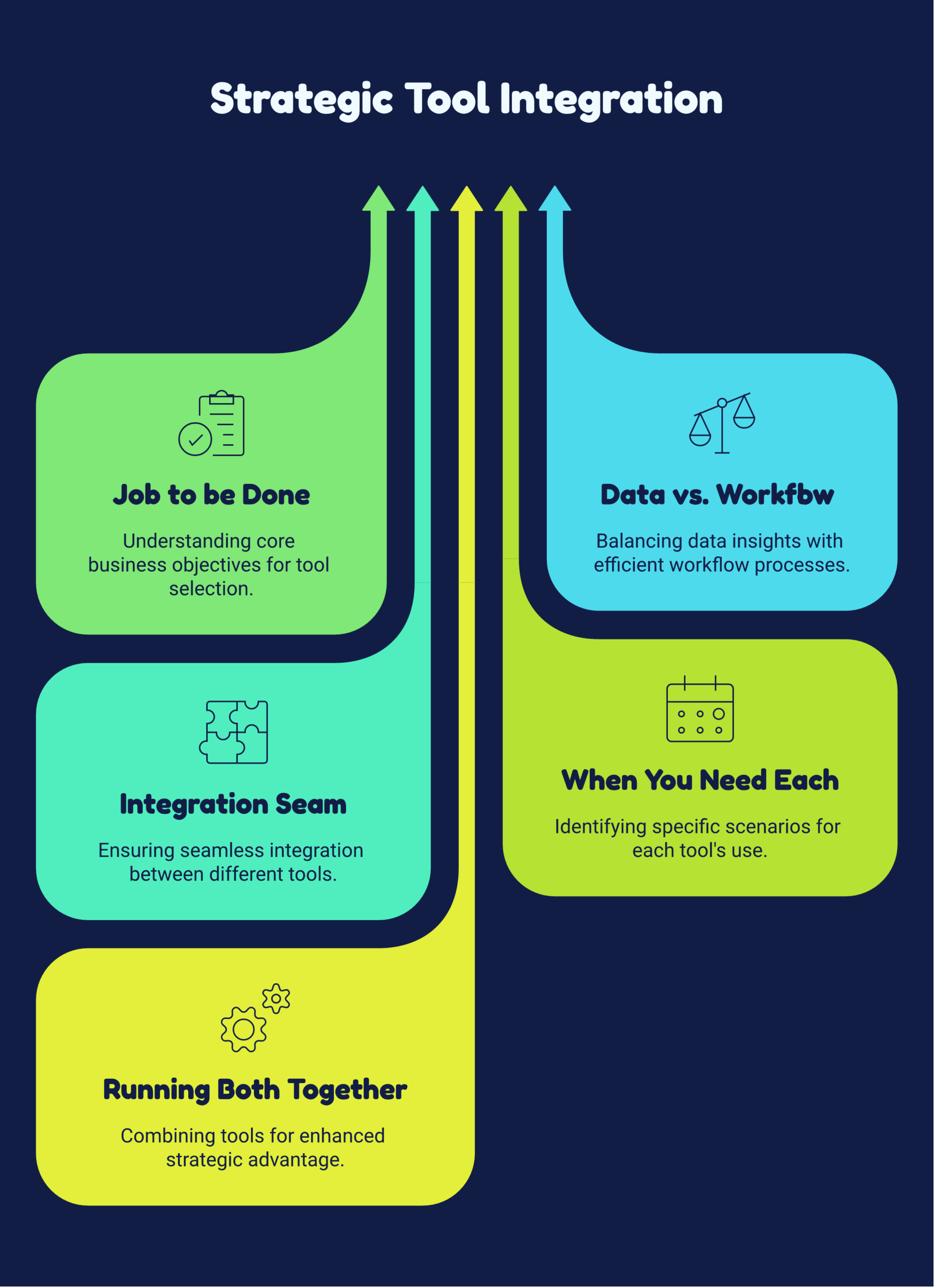
- Job to be done: Crossbeam answers where can we co-sell; Introw answers how do partners register and how do we govern it. Different questions, different tools.
- Data versus workflow: Crossbeam is a data layer that surfaces overlap; Introw is a workflow layer that runs registration, portals, and payouts. One informs, the other operates.
- The integration seam: the two connect, so overlap identified in the data layer can flow into registration and reporting in the PRM. The seam is the point of the stack, not a conflict.
- When you need each: if you cannot see partner overlap, you need the data layer; if partners cannot register deals and have no portal, you need the PRM. Many programs hit both pains within a year.
- Running both together: the mature setup uses overlap data to find the co-sell and a PRM to govern the deal, with the activation motion connecting them. That is the full picture the versus framing hides.
The through-line: Crossbeam and Introw are complements more than competitors, and the real decision is sequencing, which layer you fix first, not which vendor beats the other.
Common pitfalls in a Crossbeam vs Introw decision
- Forcing a choice between two layers: picking one and skipping the other, so you either see overlap you cannot govern or govern deals you cannot find.
- Assuming Introw maps accounts or Crossbeam registers deals: expecting one tool to do the other’s job, then discovering the gap after the purchase.
- Buying both and connecting neither: running an overlap tool and a PRM in parallel with no integration, so mapped accounts never flow into registration and reporting.
- Covering both layers and skipping the motion: installing the data and the governance and still producing nothing, because no cadence works the accounts between them.
Tools and examples
For an accurate comparison, it helps to see each tool next to the true alternatives in its own layer. In the overlap layer, Crossbeam’s peers are Pocus and Common Room. In the PRM layer, Introw’s peers include Euler and the established full-suite platforms, and any PRM evaluation should include both Introw and Euler.
| Tool | Layer | What it does |
|---|---|---|
| Crossbeam | Overlap and ecosystem data | Account mapping and co-sell signal from shared CRM data |
| Introw | PRM | Deal registration, partner portals, attribution, reporting |
| Euler | PRM | AI-native PRM for partner data, registration, and reporting |
| Pocus | Overlap and signal | Ecosystem overlap blended with product and intent signal |
| Common Room | Overlap and signal | Unified community, product, and partner signal |
A worked example shows the sequencing. A team came to me sure they had to choose between Crossbeam and Introw. They had good overlap data already and were drowning in untracked partner deals. The answer was not to swap tools. It was to add the PRM layer for registration and keep the overlap layer they had, then run a cadence that took a mapped account, registered the deal, and worked it to close. Choosing one over the other would have re-broken the half that was already working.
Forecastable’s POV
Crossbeam vs Introw is a comparison that mostly needs reframing. These are two layers of the same stack, and the teams that force a choice usually re-create the gap they were trying to close. The useful question is not which tool wins. It is which layer is broken right now, and what the sequence is to cover both.
Both layers are genuinely valuable, and neither is the strategy. Overlap data tells you where to co-sell. A PRM governs the deals and the program around them. What sits between them, the motion that takes a mapped account and works it into a registered, closed deal, is the part that produces revenue, and it is the part no platform supplies.
At Forecastable we operate above both layers. We are a partnerships operating platform focused on connecting partner conversations and actions to CRM pipeline and revenue, the flywheel from conversations to actions to pipeline to revenue. We are not a substitute for either Crossbeam or Introw. The overlap layer finds the opportunity, the PRM governs the deal, and our Co-Sell Alignment Specialist is delivered as part of the service and uses the platform to run the motion in between. We do not resell either tool.
My bet: the teams that win with partner tech stop treating layer decisions as vendor cage matches, cover both layers deliberately, and put a real motion between them.
Forecastable is an independent third-party. Any tools or vendors named here are described from public information for the reader’s own evaluation, not as paid placements, and Forecastable does not resell them.
Frequently asked questions
Are Crossbeam and Introw competitors? Not directly. Crossbeam is an overlap and ecosystem-data platform, and Introw is a PRM. They solve different layers of the partner stack and are designed to integrate, so many teams run both rather than choosing between them.
Can Introw replace Crossbeam? Not for account mapping. Introw governs deal registration, portals, and attribution, but it is not built to surface partner overlap the way an ecosystem-data platform is. If your gap is seeing where you and partners share accounts, that is the overlap layer’s job.
Can Crossbeam replace a PRM like Introw? No. Crossbeam shows the overlap; it does not register deals, host partner portals, or run tiers and incentives. A team that needs those needs a PRM, whether that is Introw, Euler, or an established platform.
Do I need both Crossbeam and Introw? Many mature programs do. You use the overlap layer to find where to co-sell and the PRM to register and govern the resulting deals. Smaller programs often start with one layer and add the other as partner count and deal volume grow.
Which should I buy first, Crossbeam or Introw? Buy for the pain you have now. If you cannot see partner overlap, start with the data layer. If partners have deals and nowhere to register them, start with the PRM. Then add the second layer once the first is producing.
Next step
The Crossbeam vs Introw decision gets easier the moment you stop framing it as a choice. Name which layer is broken, fix that one, and plan the second. Overlap data and PRM are both parts of the same stack, not rivals for the same slot.
If both layers are covered and the pipeline still is not moving, the missing piece is the motion between them. That is what we do. Start your growth journey with Forecastable and we will run the co-sell motion on top of your overlap data and your PRM. Our PRM and partner tech guide covers how the layers fit together.
Uncover Your Growth Potential
Schedule a Discovery Call