Pipeline Generation Strategy: Build a Repeatable Engine

Short answer
Short answer: A pipeline generation strategy is the deliberate plan for how a revenue team creates new qualified pipeline on a repeatable basis, across the mix of channels it runs rather than through any single campaign. It is a portfolio decision, not a tactic, and the teams that treat it as a portfolio, ranking channels by cost and conversion, build engines that compound while the teams chasing one channel at a time keep starting over.
Here is the position. A pipeline generation strategy should be built from the warmest, most efficient channel outward, and almost every team builds it from the coldest channel in because the cold one is the easiest to buy more of.
What is a pipeline generation strategy?
A pipeline generation strategy is the plan for producing new qualified pipeline reliably, quarter after quarter, through a chosen mix of channels. It differs from pipeline generation itself, which is the activity, by being the strategy layer: which channels you run, how you weight them, how you sequence investment, and how you measure each one so the mix improves over time.
The useful frame is a portfolio. Each channel, outbound, inbound, events, product-led, and partner-sourced, has a cost to generate pipeline and a rate at which that pipeline converts. A strategy is how you allocate across that portfolio, and like any portfolio, the goal is the best risk-adjusted return, not the most activity in the channel you happen to know best.
Why a pipeline generation strategy matters in 2026
A pipeline generation strategy matters in 2026 because the default channel got expensive and unreliable. Cold outbound, the channel most teams overweight, costs more to run and converts worse than it did, so a strategy that leans on it is a strategy that gets more expensive every quarter. Boards now ask not just how much pipeline you generated but at what cost per channel, and the blended answer no longer satisfies them.
The deeper reason is repeatability. A one-off campaign that fills a quarter is not a strategy, because next quarter starts from zero. A pipeline generation strategy is about building an engine, a mix of channels that produces predictable pipeline without a heroic push each time. The teams that win in a tighter market are the ones whose pipeline engine runs on efficient, repeatable channels rather than on quarterly scrambles.
In my work with revenue teams, the most common strategic error is building the whole engine on the coldest channel and treating the warmest one, partner-sourced pipeline, as a bonus, when a portfolio built the other way around is both cheaper and more durable.
How a pipeline generation strategy actually works
A pipeline generation strategy works as a portfolio build, where you rank channels by efficiency and sequence investment from the warmest outward.
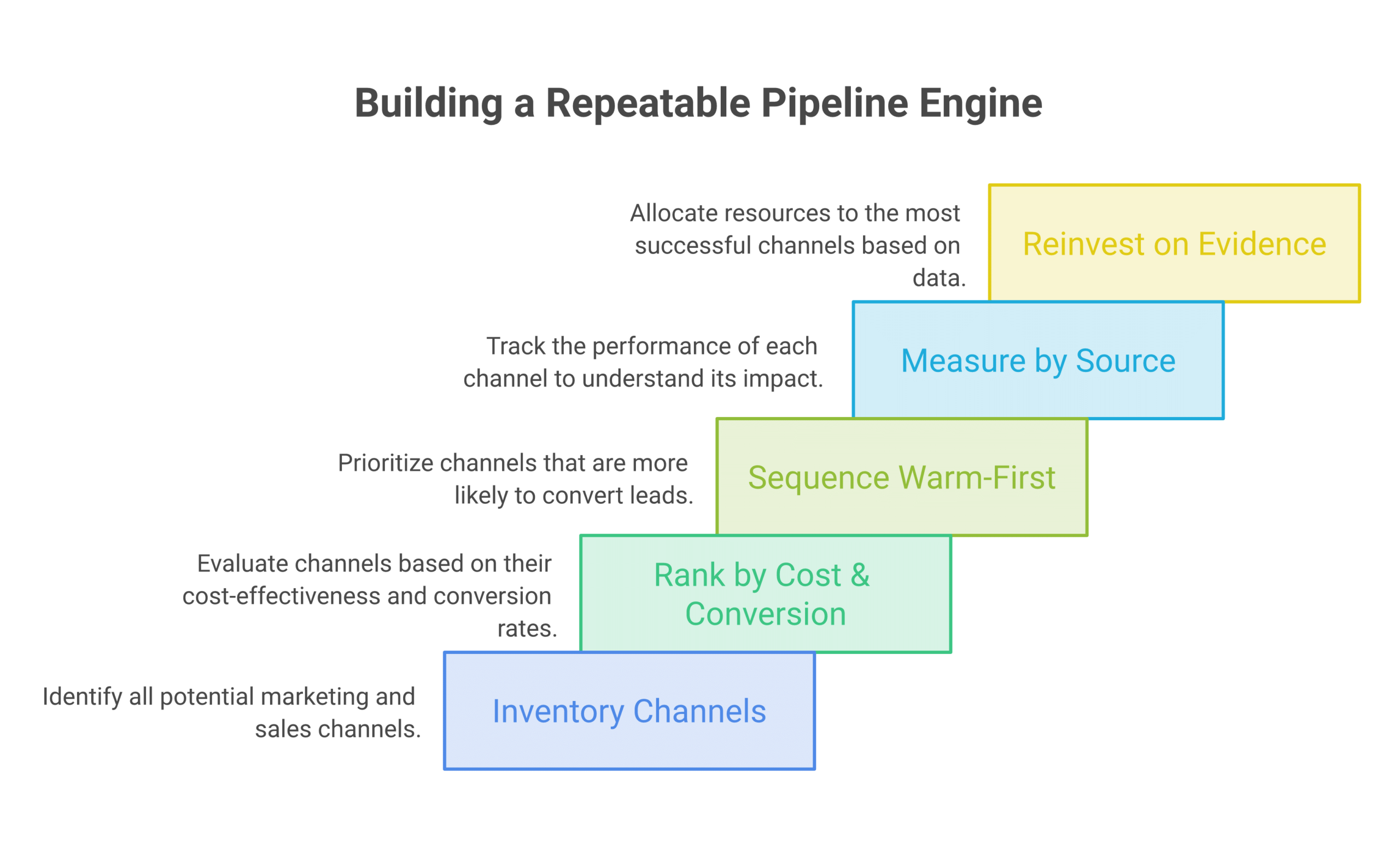
- Inventory the channels: list every route you have to new pipeline, outbound, inbound, events, product-led, and partner-sourced, so the strategy is a deliberate choice across all of them rather than a default to one.
- Rank by cost and conversion: measure what each channel costs to generate a qualified opportunity and how well that opportunity converts, because the channel that feels biggest is often not the one with the best return.
- Sequence warm-first: weight investment toward the warmest, most efficient channels before the cold ones, since a strategy anchored on the cheapest, best-converting source compounds instead of inflating.
- Measure by source: instrument every channel so pipeline and conversion are tracked separately, because a blended pipeline number hides which part of the engine is working and which is being carried.
- Reinvest on evidence: move budget toward the channels the measurement proves efficient, so the engine improves each quarter rather than ossifying around the channel the team started with.
The through-line is that a pipeline generation strategy is a portfolio you rebalance on evidence, not a campaign you repeat on faith. The warm-first sequence is what makes the engine cheaper over time instead of more expensive.
Common pitfalls
- Campaign thinking: treating pipeline generation as a series of one-off pushes, so every quarter restarts from zero instead of compounding.
- Overweighting the known channel: building the engine on the channel the team already runs rather than the one with the best cost and conversion.
- No per-channel economics: tracking total pipeline without cost and conversion by channel, so the strategy cannot tell efficient channels from expensive ones.
- Cold-first sequencing: anchoring the engine on cold outbound and treating warm channels as extras, which is the most expensive way to build the portfolio.
- Leaving partners as a bonus: running partner-sourced pipeline opportunistically instead of as a weighted, measured channel, so the warmest source never gets the investment its returns justify.
What this looks like in practice
A team sets out to fix an unreliable pipeline and starts where most teams start, by buying more outbound. Pipeline rises for a quarter, then the cost per opportunity climbs and the next quarter needs another push. They stop and build an actual portfolio instead. Ranking channels by cost and conversion, they find outbound is their most expensive pipeline and a small, un-owned partner channel is their cheapest and best-converting. They rebuild the strategy warm-first: the partner channel gets weighted and instrumented as a primary source, outbound gets trimmed to the segments where only it reaches the buyer, and every channel is measured by source so the mix can be rebalanced quarterly. The engine that results produces steadier pipeline at a lower blended cost, and it keeps improving because the team now reinvests on evidence.
That is the difference between generating pipeline and building a pipeline engine. The first is a push you repeat; the second is a portfolio that compounds.
Forecastable’s POV
A pipeline generation strategy is a portfolio problem that most teams solve backward. They build the engine on the coldest, most expensive channel because it is the easiest to buy more of, and they treat the warmest channel as a happy accident. The fix is to rank channels honestly by cost and conversion and sequence investment from the warm end in.
The warm end is almost always partner-sourced pipeline, and it is almost always the least instrumented part of the portfolio. A partner introduction converts warmer and costs less to generate than a cold opportunity, but because the introduction gets credited to whichever rep logged the next activity, the channel looks small and loses the budget argument. At Forecastable we are a partnerships operating platform that connects partner conversations and actions to CRM pipeline and revenue, so partner-sourced pipeline becomes a measured, weightable channel in the portfolio instead of a bonus nobody can size. Our Co-Sell Alignment Specialist is delivered as part of the service and uses the platform to keep that channel producing week over week.
My bet: the teams that build their pipeline generation strategy as a warm-first portfolio, and measure every channel by source, are the ones whose pipeline gets cheaper and more predictable instead of more expensive and more frantic.
Forecastable is an independent third-party. Any tools, vendors, or third-party figures referenced here are described from public information for the reader’s own evaluation, not as paid placements.
Frequently asked questions
What is a pipeline generation strategy? It is the deliberate plan for creating new qualified pipeline repeatably across a mix of channels, rather than through one-off campaigns. It is a portfolio decision about which channels to run, how to weight them, and how to measure each so the mix improves over time.
How is it different from pipeline generation? Pipeline generation is the activity of creating pipeline; a pipeline generation strategy is the layer above it that decides the channel mix, the sequencing of investment, and the measurement. One is the work; the other is the plan that makes the work repeatable.
What channels belong in a pipeline generation strategy? Outbound, inbound and content, events, product-led, and partner-sourced, run as a weighted portfolio rather than a single channel. The right weighting depends on each channel’s cost per qualified opportunity and its conversion rate.
How do I decide how to weight the channels? Rank each channel by what it costs to generate a qualified opportunity and how well those opportunities convert, then weight investment toward the most efficient. Sequence warm, high-converting channels first because they compound rather than inflate.
Why should a pipeline strategy start with the warmest channel? Because the warmest channels, usually partner-sourced, cost less per opportunity and convert better, so anchoring the engine on them makes pipeline cheaper over time. Building cold-first is the most expensive way to assemble the portfolio.
How do I make pipeline generation repeatable? Treat it as an engine, not a campaign: a measured channel portfolio you rebalance on evidence each quarter. Measuring every channel by source is what lets you reinvest in what works instead of restarting from zero.
Next step
Rank your pipeline channels by cost per qualified opportunity and conversion this week, then check whether you are weighting the cheapest, best-converting one or the one you know best. The gap between those two is your opportunity.
If the warmest channel in your portfolio is partner-sourced, that is the one we instrument and weight. Start your growth journey with Forecastable and we will make partner-sourced pipeline a measured channel in your engine. Our pipeline generation guide covers the activity, and the partner-sourced pipeline guide covers the warm channel to build around.
Uncover Your Growth Potential
Schedule a Discovery Call