Partner Management: What It Is and How to Do It Well

Short answer
Short answer: Partner management is the ongoing discipline of taking signed partners and turning them into partners that actually produce revenue, through selection, onboarding, a real operating cadence, and measurement. It matters because most programs are good at signing partners and bad at activating them, and the gap between the two is exactly where partner management lives.
The trap is thinking a tool does this. A platform records the program. Partner management is the weekly human work of making partners produce, and it does not happen because you bought software to watch it not happen.
What is partner management?
Partner management is the practice of running relationships with partners so they generate business, not just exist on a list. It covers the full arc: choosing which partners to invest in, getting them from signed to selling, running a cadence of joint planning and reviews, supporting their co-sell, and measuring what each one produces. It is a discipline, not a department name and not a piece of software.
The confusion worth clearing is between administration and management. Administration is the record-keeping: who is registered, what deals were submitted, which content went out. That is real work and tools do it well. Management is the judgment and effort on top: deciding which three partners get your time this quarter, running the account-mapping session, chasing the play that stalled. Programs that own the administration and skip the management get a tidy portal and a quiet pipeline.
The distinction that matters most is between having partners and managing them. Signing a partner is a calendar event. Managing one is an operating commitment that recurs every week. A program with 200 signed partners and no management is not a big program, it is a big list, and the two get confused constantly.
Why partner management matters in 2026
Partner management matters because partner-sourced revenue is now large enough that leaving it unmanaged means leaving real pipeline on the table. Analyst Jay McBain has estimated that roughly 96% of technology deals are partner-surrounded, and Crossbeam has published that partnering can drive several times more pipeline and materially higher win rates. Those returns only show up when someone is actively managing the partners, not just holding the contracts.
The strategic point is that the constraint is almost never partner count. Most programs already have more signed partners than they engage. The binding constraint is management capacity: the number of relationships anyone is actually running a cadence with. Adding partners to an unmanaged program adds names, not revenue, and often makes the real problem harder to see.
The recurring failure is buying tooling as a substitute for management. When a partnerships leader tells me the answer is a new platform, I push back: a tool does not drive pipeline, engagement and execution do. I have watched teams evaluate portals while their existing partners went cold for want of a single weekly conversation. The software is worth owning at scale, and it manages nothing on its own.
How partner management actually works
Partner management that produces runs on five components. Notice that four of the five are human work the software only supports.
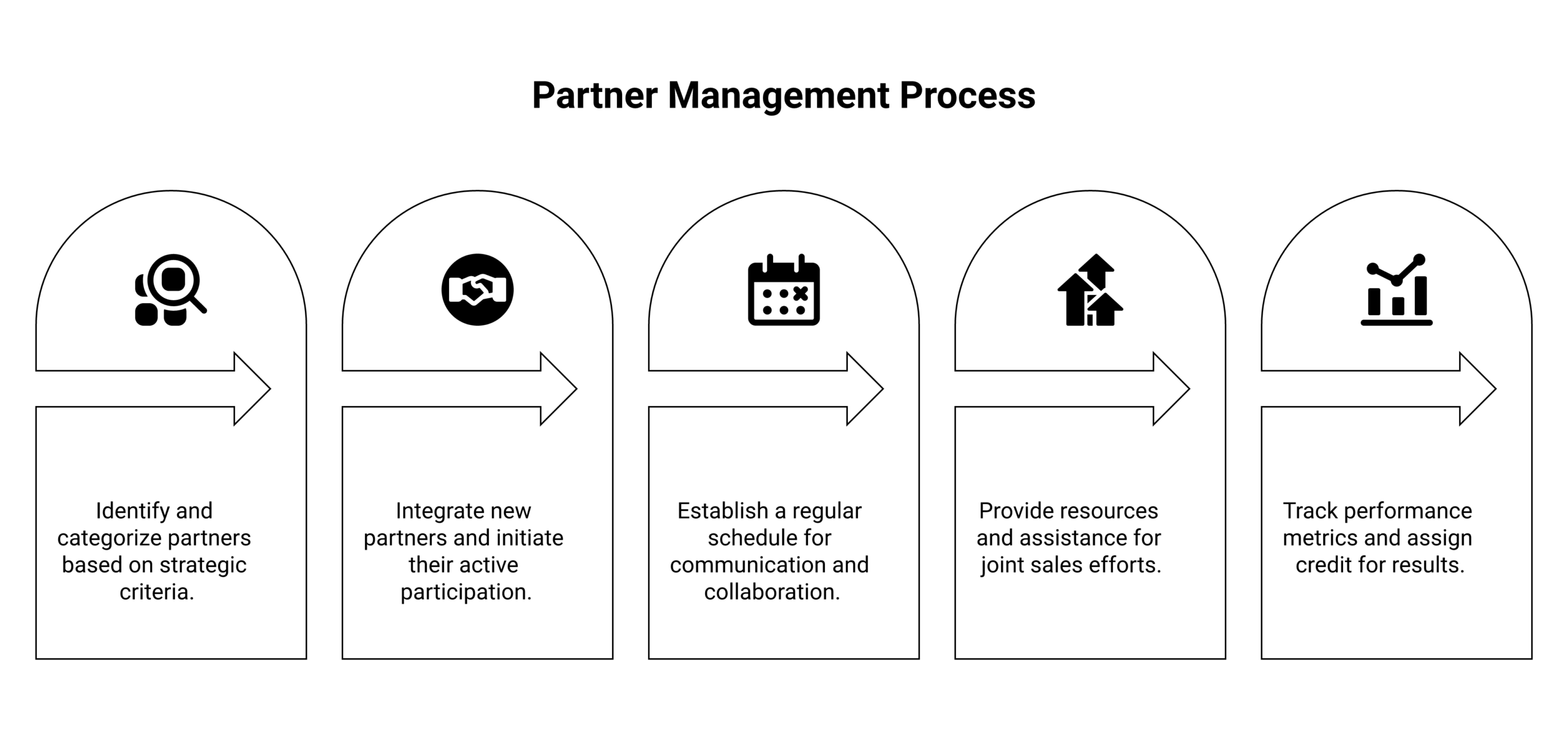
- Selection and segmentation: decide which partners get real investment and which stay warm. Equal effort across unequal partners is how programs spread themselves thin, so the first act of management is choosing where the time goes.
- Onboarding and activation: take a signed partner to a first deal with structured steps, training, and a clear first play. Activation is the moment a partner becomes real, and a program that stops at the signature never gets there.
- The operating cadence: run recurring joint planning and reviews with the partners you have chosen, with named plays, owners, and dates. This is the heartbeat of management, and it is the part that quietly disappears when no one owns it.
- Enablement and co-sell support: give partners the messaging, the account mapping, and the warm introductions that let them actually sell the combined value. Support is what turns a willing partner into a producing one.
- Measurement and attribution: track sourced and influenced pipeline per partner and tie it to your CRM, so you can tell the producers from the dormant and reallocate accordingly. Management you cannot measure decays into activity you cannot defend.
The through-line is that partner management is mostly cadence and judgment, supported by tooling, not replaced by it. The software holds the record. A person decides which partner to push, runs the review, and makes the play happen. Programs that get this backwards buy a platform and wait for pipeline that never comes.
Common pitfalls
- Confusing administration with management: owning the portal and the record-keeping while no one runs the weekly cadence. The program looks organized and produces nothing.
- Equal effort across unequal partners: spreading the same attention over every signed partner, so the few strong ones get too little and the many weak ones absorb time they will never repay.
- Stopping at the signature: treating a signed partner as a done deal instead of the start of activation. A signature with no follow-through is a logo, not a channel.
- Buying tooling as a substitute: expecting a PRM to manage partners. The platform administers; it does not run the review, chase the play, or decide where the effort goes.
- No measurement: managing partners without tracking what each produces, so you cannot tell where your time is paying off and you keep investing evenly across producers and dormant accounts alike.
What this looks like in practice
The version that works starts by choosing. Take a partnerships team I would model this on: scaling from a handful of people to a larger team, with 50 partners expected to double, and everyone stuck in reactive mode, knocking on doors asking for deals. The fix was not more partners or a bigger portal. It was management: pick the partners worth a cadence, run joint planning with those, and support their selling every week, while the rest stayed warm on a lighter touch. The reactive door-knocking became a managed motion, and the pipeline followed the partners who were actually being run.
The software layer had its place, and it was a supporting one. The team evaluated PRM platforms, Introw and Euler among them, to handle the administration, the portal, deal registration, and reporting, so the humans could spend their hours on the management the tool could not do. The sequencing mattered: administration tooling underneath, management on top, never the tool as the strategy.
The contrast is the program that answers every partner problem with a new system. It buys the portal, migrates the data, and still has no one running a weekly cadence with the ten partners that matter. Same partners, same quarter, a tidier database, and the same quiet pipeline. The lesson repeats across programs: the constraint is management capacity, and the teams that win build the cadence first and let the tool support it.
Forecastable’s POV
Partner management is the least glamorous and most decisive part of a partner program. Signing partners gets the attention and the announcements. Managing them, the weekly, unremarkable work of running a cadence with the few that matter, is what actually produces revenue, and it is the part programs most often skip because it does not scale by buying something.
At Forecastable we build for exactly this layer. We are a partnerships operating platform focused on connecting partner conversations and actions to CRM pipeline and revenue, the flywheel that runs from conversations to actions to pipeline to revenue. A PRM answers “is this partner registered and what did they submit.” The work we deliver as part of the service answers “which partners are we actively managing, and are they producing,” run on the Forecastable platform. Administration is the floor. Management is the return.
My bet: the programs that win will measure themselves by how many partners they actively manage, not how many they have signed, and will treat their PRM as plumbing rather than strategy. The teams equating a bigger platform with a better program are managing the tool instead of the partners.
Forecastable is an independent third-party. Any tools or vendors named here are described from public information for the reader’s own evaluation, not as paid placements, and Forecastable does not resell them.
Frequently asked questions
What is partner management? Partner management is the discipline of turning signed partners into producing ones through selection, onboarding and activation, an operating cadence of joint planning and reviews, co-sell support, and measurement. It is ongoing human work, not a one-time setup or a piece of software.
What is the difference between partner management and a PRM? Partner management is the practice of running partner relationships so they produce. A PRM, or partner relationship management platform, is software that administers the program: portal, deal registration, content, and reporting. The PRM supports partner management; it does not perform it.
What does a partner manager do? A partner manager selects which partners to invest in, activates signed partners toward a first deal, runs a recurring cadence of planning and reviews, supports partners’ co-selling, and tracks what each partner produces. The core of the job is judgment and cadence, not administration.
How many partners can one person manage? Fewer than most programs assume, because real management means a weekly cadence per partner. That is why segmentation matters: a manager runs a deep cadence with a chosen few and keeps the rest warm on a lighter touch, rather than pretending to manage everyone equally.
Does partner management require software? At scale, yes, for administration: deal registration, a partner portal, and reporting become hard to run by hand. But the software administers the program and does not manage the partners. The management, the cadence and the judgment, stays human whether or not you own a platform.
How do you measure partner management? Track sourced and influenced pipeline per partner, tied to your CRM, and watch how many partners you are actively running a cadence with. Partner count and portal activity are weak proxies. The real measure is producing partners under active management.
Next step
Count the partners you are running an actual weekly cadence with, then count the partners you have signed. If the first number is small and the second is large, your constraint is management, not partner count, and no tool fixes that on its own.
If you want the cadence, the activation, and the measurement run on the partners that matter, that is exactly what we do. Start your growth journey with Forecastable and we will manage the few partners worth managing and prove what they produce. Our PRM and partner tech guide covers where the software layer fits underneath.
Uncover Your Growth Potential
Schedule a Discovery Call