PRM Software in 2026: From Partner Portal to AI Chief Partnerships Officer
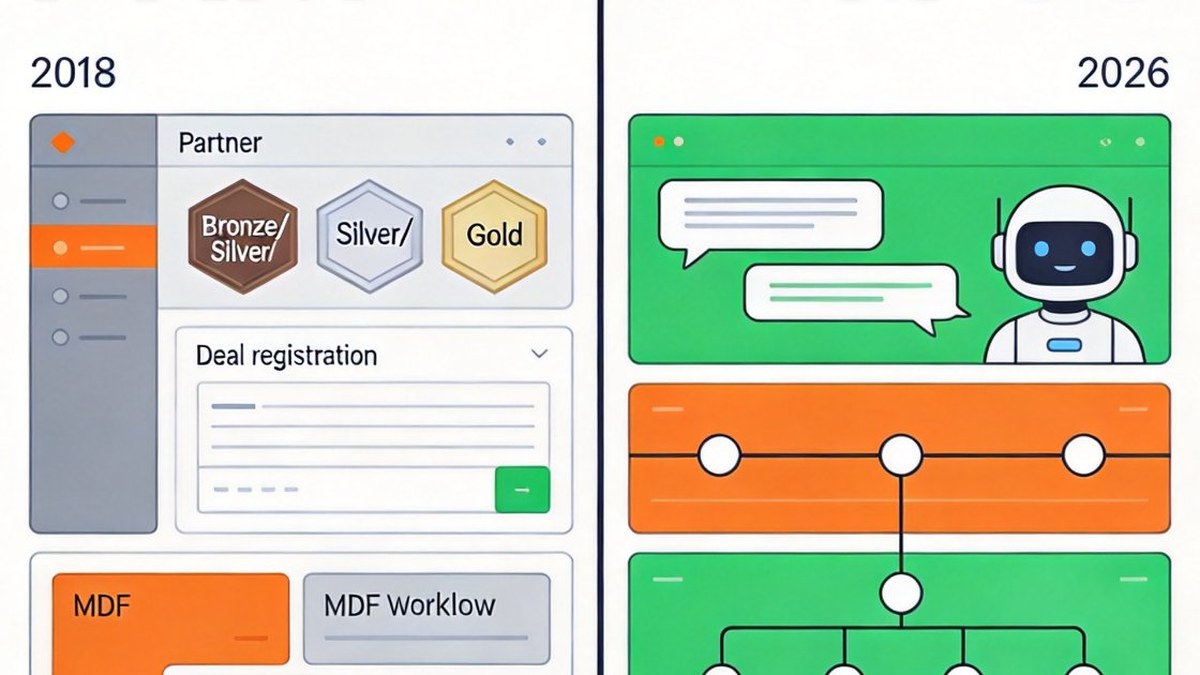
PRM (Partner Relationship Management) is the software category that helps a vendor recruit, onboard, enable, and track sales partners. Deal registration, partner portals, tier management, MDF, certification, payouts. That definition has held for fifteen years.
It’s about to stop holding.
The PRM category is splitting in two. On one side, the legacy stack (Impartner, Zinfi, Mindmatrix, Allbound, Magentrix) keeps doing what it has always done: portals, deal-reg, MDF workflows, partner-marketing automation. On the other side, a new layer is forming that calls itself AI-native PRM, collaborative PRM, or partner intelligence. Introw ships agentic channel-conflict resolution, agentic deal coaching, and a Claude MCP connector. Euler ships AI agents named Pam (for partners) and Pops (for customers). The terminology land-grab around “agentic partnerships” is happening in real time, in 2026, on competitor product pages.
This post is for the partnerships leader making a buying decision while the category is mid-shift, and for the CRO whose CFO is about to ask why partner-team headcount keeps growing while partner-sourced ARR doesn’t. The thesis: the legacy PRM stack is becoming plumbing, the new AI-native PRM stack is becoming a judgment layer, and the partner manager role as we have known it for the last decade is ending.
What is PRM (Partner Relationship Management)?
PRM is purpose-built software for managing the partner side of revenue. CRM manages buyer relationships. PRM manages partner relationships and the deals partners bring in. The two should integrate so partner-attributed opportunities flow to the CRO with attribution intact.
A modern PRM does six things:
- Maintains a partner directory with tier, contract, and named contacts.
- Runs deal registration with conflict-resolution rules.
- Distributes enablement content (decks, demos, pricing sheets) gated by partner tier.
- Syncs partner-attributed opportunities to the CRM.
- Runs MDF (market development funds) and incentive workflows.
- Reports partner-sourced and partner-influenced pipeline at the program level.
| Category | What it manages | Who’s the buyer | Top Vendors |
|---|---|---|---|
| CRM | Buyer relationships and direct-sales pipeline | Sales leadership | HubSpot, Microsoft Dynamics, Salesforce |
| PRM | Partner relationships and partner-attributed pipeline | Partnerships leadership | Allbound, Euler, Impartner, Introw, Magentrix, Mindmatrix, PartnerStack, Zinfi |
| Partner portal | Branded login surface for partners (subset of PRM) | Partnerships leadership | Inside the PRM, or a Salesforce-native build |
| Ecosystem platform / account mapping | Cross-company customer-overlap data | Partnerships and revenue ops | Crossbeam, PartnerTap |
PRM is not the same as a partner portal. The portal is one feature inside a PRM. PRM is not the same as an ecosystem platform either. The ecosystem platform sits below PRM in the stack and produces the overlap data PRM acts on. Confusing the three is the most common evaluation mistake we see in customer pre-buy conversations.
What PRM was built for (and why it’s starting to break)
The legacy PRM stack was built for the channel-resale era. It works. It’s just not enough anymore.
PRM emerged in the early 2000s when channel-heavy hardware vendors needed a portal to give resellers product information. Today’s PRM is broader. It serves tech alliance teams, reseller channels, agency partners, ISV partnerships, and integration partners, often inside the same instance.
The four legacy use cases are real and durable:
- Deal registration with conflict-resolution rules. When two partners register the same account, the PRM decides who wins.
- Partner portal as a tier-gated content surface. Decks, demos, pricing, certification.
- MDF (market development funds) workflow. Submit, approve, track, settle.
- Payout of referral fees and revenue shares with audit trail.
Most B2B SaaS partnerships above 30 active partners need all four. None of them, individually, produces revenue. They administer the program. The program produces revenue when the AEs and partner managers run a co-sell motion on top of the data the program is collecting. That’s the gap I wrote about on LinkedIn in 2023 and the position has not aged out: in two years of working closely with co-sell programs, we still don’t run into PRM needs at the moment of motion. Deal-reg and portal are good for what they are. They are not the operating system of a partnership program.
AI-native PRM: what’s actually new (and what’s marketing)
Three things are genuinely new in the AI-native PRM stack. Three things are mostly marketing. Tell the difference and you make better buying decisions.
The new entrants in the category include Introw, Euler, and a handful of others positioning around AI-native PRM, collaborative PRM, or partner intelligence. Here’s what’s real and what’s not:
| What’s actually new | What’s mostly marketing |
|---|---|
| Agentic channel-conflict resolution: AI decides which partner gets which deal-reg conflict, with a confidence score and a transparent audit trail. | “AI-native” as a sticker on a 2018 portal. |
| Conversation-to-action extraction: AI agents read call transcripts, emails, and Slack threads, and propose next steps. | “AI partner matching” that’s actually rules-based filtering with a chat wrapper. |
| AI deal coaching: the system tells the AE which partner-attributed deal needs attention this week and why. | “AI-powered analytics” that’s a dashboard with a search bar. |
What I’d call genuinely new in 2026: the move from PRM as a system of record to PRM as a system of judgment. Introw shipped agentic AI that creates and updates CRM records based on context, plus a Claude MCP connector that lets a partner manager run their program by talking to Claude in natural language. Euler shipped Pam (an AI agent for partners) and Pops (an AI agent for customers) that coordinate joint motion across the partnership without a human chasing every step. ZINFI is positioning around “PartnerOps.” The terminology is not standardized yet, which is why the buying conversation is so hard right now.
The reason this matters is that “PRM” in 2026 will not mean the same thing it meant in 2024. Buying the legacy stack is fine for some programs. Buying the AI-native stack is right for others. Confusing the two will get you the wrong product.
The judgment layer: what AI-native PRM is becoming
AI-native PRM is dividing into two architectures. One automates execution. One automates judgment. They are not the same thing and they are not priced the same.
The execution layer does what a partner manager does today, only faster and at scale. It schedules outreach, drafts follow-ups, updates CRM records, processes deal-reg conflicts, manages MDF requests, and chases content updates. Introw and Euler are building strong execution layers right now. Pam (Euler’s partner-side agent) and the Introw “agentic CRM ops” feature set are good examples.
The judgment layer is something else. It decides which actions matter this week and why. Examples:
- Surfaces the three accounts that should get partner-attributed motion before quarter-end.
- Tells the partnerships leader that two of their top five partners are showing health-decline signals based on cadence drop and conversation drift.
- Flags a deal that should be co-sold rather than direct-sold based on partner overlap data plus historical conversion patterns.
At Forecastable, this judgment capability shows up inside a partnership outcome we deliver with you. Our team handles the work: identifying which accounts need motion, surfacing partner-health risks, flagging deals that should be co-sold. The work is supported by technology: relationship maps, clear plans, full visibility, always-on communications. Your team gets the partner-sourced pipeline. The motion runs with sales rigor.
The two layers are complements, not substitutes. A program with judgment but no execution stalls because the partner manager can’t do everything the judgment layer surfaces. A program with execution but no judgment scales noise as fast as it scales signal. Most mid-market B2B SaaS programs in 2026 need both, integrated through the CRM and ecosystem platform.
The partner manager role is ending. Here’s what’s replacing it.
The partner manager job, as it has been defined since 2015, is ending. Tools aren’t replacing it. Sales discipline is.
This is the most uncomfortable section of the post. It’s also the one most worth reading.
Partner managers came up through the VC era. Money was cheap. Partnerships did not need to produce revenue. The role was check-the-box:
- Sign logos.
- Host webinars.
- Hand out swag at the SaaStr booth.
- Attend Partnership Leaders events.
- Run the QBR with the strategic alliance team.
That whole shape of the role is over. Crossbeam research cited by Chris Lavoie shows roughly 43% partner-manager attrition in the last 12-month window we have data on. Our read is that the next 24 months will accelerate that. Eighty percent or more of the partner managers in role today will not be in role two years from now. Some of those teams will be cut. Some will be replaced by salespeople with rigor. Some will be replaced by an AI execution layer plus a half-time orchestration specialist. None of those outcomes preserves the 2018 partner manager job description.
What’s replacing the role is closer to a Co-Sell Alignment Specialist. The job: own a number, run a co-sell motion on five named partners, manage the AI judgment layer, escalate the exceptions, and report partner-sourced ARR to the CRO weekly. Sales muscle plus partnership operations plus AI fluency. If you’re a partner manager today and you want to be in role in 2028, sharpen the sales muscle, learn the agentic stack, and push your own org to put a partner-sourced ARR number in your comp plan. If you’re a partnerships leader hiring today, hire that profile.
How to evaluate PRM today (a 2026 buyer’s diagnostic)
Five questions, in order. If you answer all five, you know what to buy.
- Do you have a working partner motion to amplify? If not, software won’t give you one. Ship two named co-sell motions on two partners first. Buy PRM after you have wins to standardize.
- Is your CRM partner-attribution clean? If your CRM can’t tell partner-sourced from partner-influenced from direct, no PRM in the world will fix the reporting gap. Clean the CRM fields first.
- Are you buying execution layer, judgment layer, or both? Most evaluation conversations skip this question. Pick deliberately.
- What’s your partner count and direction of travel? Under 30 active partners and growing slowly: a CRM customization plus a shared drive is fine. 30 to 80 partners with co-sell volume: legacy PRM (Impartner, Zinfi, PartnerStack, Allbound, Magentrix) earns its keep. Above 80 partners with multi-motion complexity: pair a legacy PRM with a judgment-layer vendor.
- Does the vendor’s roadmap match the direction the category is moving? Agentic, judgment-aware, transparent confidence-scored AI is where the market is heading. A 2018 portal with a chatbot bolted on is not where the market is heading. Choose accordingly.
A partnerships leader who can answer those five questions in a CFO meeting will defend their PRM purchase. A leader who can’t will lose budget at the next downturn.
Forecastable’s POV
Most of the loud opinions about PRM in 2026 are wrong on one of three things. Here’s the position we hold, the position we don’t, and the position we wish more vendors would hold.
First, the PRM category is splitting and most buyers don’t realize it. Pick a side intentionally. The legacy stack does deal-reg, portal, MDF, payout. The new layer does judgment. Buying one when you needed the other is the most expensive mistake in the partnerships budget right now.
Second, Forecastable doesn’t sell software, and we don’t sell services. We sell revenue outcomes. We build partner-led pipeline with you, alongside whichever PRM you run. We integrate with Slack, Teams, Salesforce, HubSpot, Calendar, Email, and a variety of call recording tools. Partners don’t create revenue. People do. We activate the people, run the motion with sales rigor, and put a defensible partner-sourced ARR number on the CRO’s dashboard. We don’t compete with PRM vendors. We just deliver alongside them.
Third, the CFO test for any partnerships investment in 2026 is unforgiving and we wish more vendors held it: can you point to partner-sourced ARR within two quarters of the investment going live? If no, you are buying software theater. The legacy PRM stack often fails this test because the program was never going to produce a number. The AI-native PRM stack will fail this test if the program isn’t there to amplify. Software amplifies a working motion. It does not create one.
Frequently-Asked Questions
What’s the difference between PRM and CRM? CRM tracks the buyer relationship. PRM tracks the partner relationship and the deals partners bring into the buyer pipeline. They should integrate so partner-attributed opportunities flow into the CRM with attribution intact.
Is a partner portal the same as a PRM? No. A partner portal is one feature inside a PRM. A full PRM also runs deal registration, content gating, MDF, certification, and reporting. A standalone partner portal is a 2010 product. Don’t buy one in 2026.
Do I need a PRM if I have fewer than 30 partners? Probably not. A CRM customization, a shared drive, and clean partner-attribution fields handle the first 30 partners. The case for a PRM gets strong around partner number 30 and unavoidable around partner number 80.
How long does a PRM implementation take? A focused implementation on a clean program runs 6 to 12 weeks. A heavyweight enterprise rollout runs 4 to 9 months. The biggest variable is CRM-integration scope, not the PRM itself.
What’s typical PRM software pricing in 2026? SMB-tier vendors (PartnerStack, Introw, Euler at smaller deployments) sit in the $10K to $25K annual range. Mid-market and enterprise vendors (Impartner, Zinfi, Allbound, Magentrix, Mindmatrix) sit in the $25K to $150K range depending on partner count and module scope. Salesforce-native partner portals run higher once you add the SI implementation cost.
How does PRM connect to ecosystem-led growth (ELG)? PRM is operational infrastructure. ELG is the strategic motion that uses partner-ecosystem data to acquire, expand, and retain customers. PRM is one of the tools that operationalizes ELG. The ecosystem platform (Crossbeam, PartnerTap) is another. Co-sell orchestration is a third.
Can a PRM replace a partnerships team? No. A PRM is plumbing. The partnerships team makes the program work. A PRM with no partnerships team is an empty portal. A partnerships team with no PRM and an above-30 partner count is a spreadsheet bottleneck.
What is AI-native PRM? A 2025-and-later platform built around agentic workflows (partner intelligence, automated deal-reg triage, AI deal coaching, conversation-to-action extraction) rather than a 2010-era portal with AI features bolted on. The category is small but growing fast. Pick the layer (execution, judgment, or both) that matches your actual program need.
Next step
If you’re sizing a PRM purchase, start with the five-question diagnostic before you book a single demo. The answers tell you whether the right next investment is a legacy PRM, an AI-native PRM, both, or neither. They also tell you what conversation to take into the CFO meeting.
If you want a defensible partner-sourced ARR number on a single slide for that meeting, that’s the outcome we sell at Forecastable. We don’t sell software. We don’t sell services. We sell revenue outcomes. Partner-led pipeline built with your team, with sales rigor and full visibility, alongside whichever PRM you run. The first conversation is 30 minutes and covers your specific program, not a generic demo. Talk to Forecastable.
For deeper reading on the parts of the partnership program that PRM doesn’t touch, the co-sell motion post and the ecosystem-led growth pillar both build on the foundation in this piece.
By Alex Buckles
Forecastable is an independent third-party professional services company. Our evaluations of other vendors are based on publicly-available information as of May 2026 and our own client experience.
Uncover Your Growth Potential
Whether starting with a single sales team or a single partner, any co-sell motion can be live within 30 days.
Schedule a Discovery Call