*Sales Preference:* How to Know When Someone is a Supporter, Opponent, or Neutral and Where to Concentrate
Sales Preference: How to Know When Someone is a Supporter, Opponent, or Neutral and Where to Concentrate
In the complex sale, generating group consensus is the name of the game. This means the goal should always be to definitively determine who’s in your corner and who’s not in your corner, so you’re taking the appropriate actions. A misdiagnosis here will almost certainly result in unwanted surprises down the road.
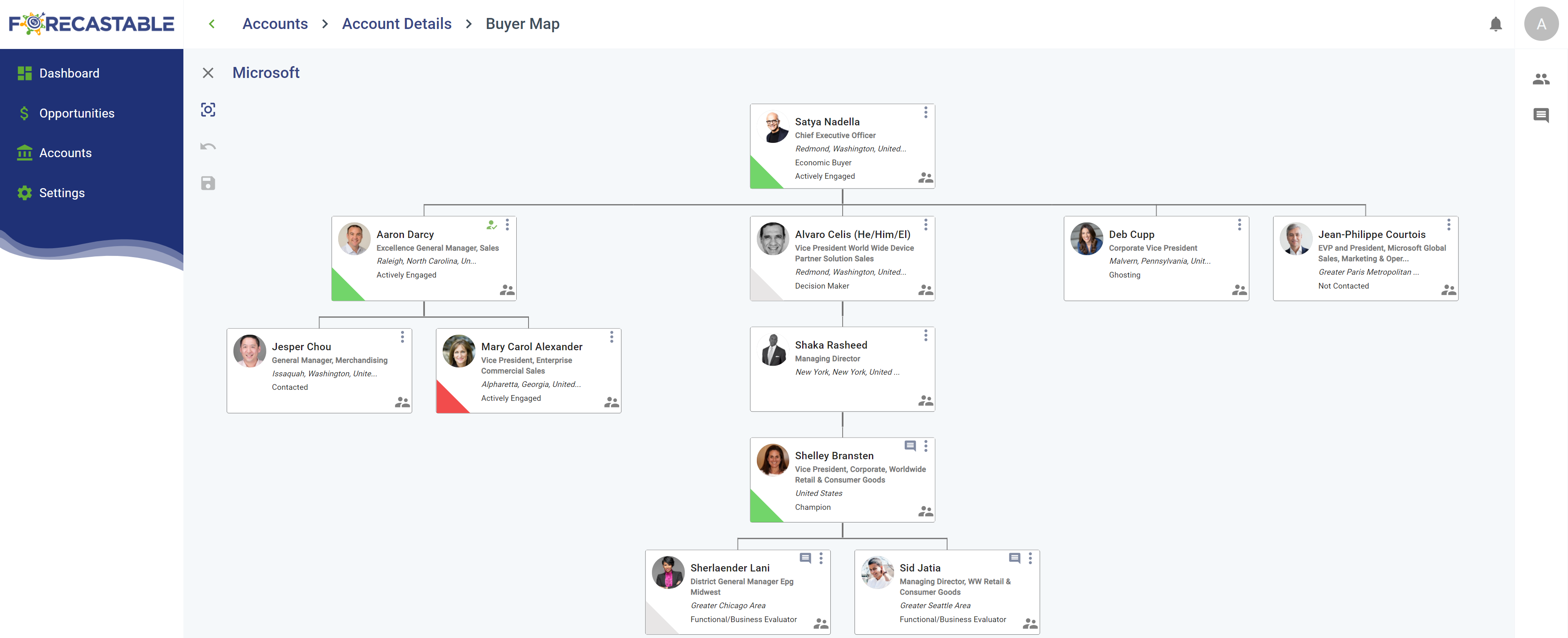
If someone’s in your corner, they’re a supporter (green). If they’re not in your corner, they’re an opponent (red). If you’re unsure, mark them as neutral (gray) and potentially treat them as opponents. Here’s an example of a buyer map I quickly put together for this post using Microsoft.
When Should a Stakeholder be Considered a Supporter?
Whenever I’m in a one-on-one with a sales rep and I see someone marked as a supporter, I always challenge it with “Why do you consider this stakeholder a supporter?” It’s not because I don’t believe they’re a supporter or because I want to make the rep’s life difficult. It’s because if you start treating someone as a supporter when they’re not, you can absolutely get burned down the line. It’s the rep’s call, but it’s healthy to challenge this so the rep thinks deeply about it and makes an objective determination. If I feel any hesitation from the rep, I tend to ask this as a follow-up question: “If that person were asked independently which solution they would choose, without you in the room, are you absolutely confident they would choose our solution?”
If you want to get really granular, we believe there are varying levels of supporters, but for simplicity purposes we just call them Supporters. Here are the levels we see though:
- Accepting: They approve of your solution and have accepted it as the right choice for the company over all other solutions, but aren’t exactly head over heels or passionate about it and they certainly won’t stick their necks out for you.
- Advocating: This is a true supporter that will advocate and sell for you when you’re not present. You should have zero doubts about whether or not they’d recommend your solution when asked.
When Should a Stakeholder be Considered an Opponent?
Opponents are stakeholders who don’t support your solution. When asked independently, these stakeholders will not recommend your solution or actively recommend an alternative solution. Like the supporter designation, we believe there are varying levels of opponents as well, but we stick with the “Opponent” designation for simplicity purposes. However, here are the levels we see:
- Active Skeptic: This stakeholder will challenge you at every turn. They have a “concern” (my least favorite word in business), in every meeting that casts doubt or shadows over your wonderful solution.
- Vocal Opponent: This is someone that is actively advocating for another provider or just against you in general. They’re doing more than simply challenging you at every turn. Everyone knows this stakeholder does not favor you, so where they stand is clear.
- Combative: This person’s hostility is actively campaigning against you and is toxic to your deal. If they could wear a T-shirt around the office that says, “Don’t buy from this vendor because they’re awful”, they would. Their motivation could be personal, political, or a combination of the two, but their mind cannot be changed. Too far gone.
LEARN HOW TO DO THIS IN A CO-SELL MOTION
When Should a Stakeholder be Considered Neutral?
Neutral means you’ve interacted with them, but they’re not clearly a supporter or opponent. If you’ve never met them and don’t know about them, don’t mark them as neutral. Just leave it blank. Again, there can be varying levels of neutrality, but for simplicity we just use the designation of neutral. Here are the levels we see though:
- Receptive: These are people who are open to the idea of your solution. They probably genuinely see the value and if your solution were purchased, they wouldn’t have any major issues.
- Indifferent: This is someone who simply doesn’t care what gets selected. If given the opportunity to vote, they’ll likely vote in the direction of the majority or in the direction of someone internally that has positive social influence over them.
Which Stakeholders Should I Focus my Time and Energy on?
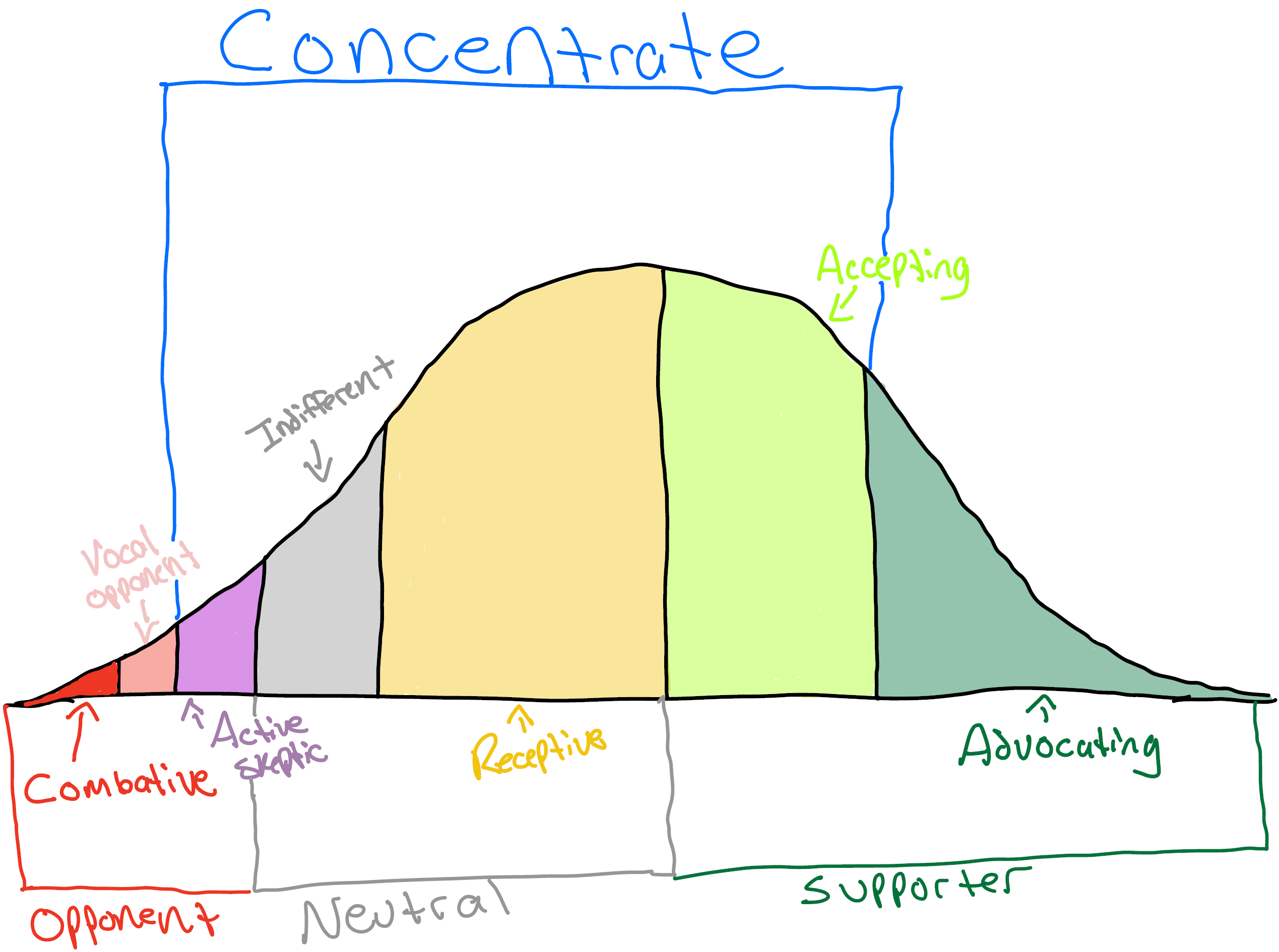
Please refer to the “Stakeholder Concentration Curve” below for our recommendation. This is purely an example of a single sales scenario and the size of each of the seven sections will vary from deal to deal.
We’ve gone into greater detail on what to do with each of these stakeholder types in our post on how to manage stakeholders with different levels of preference. In general though, the folks on the far left side (Combative and Vocal Opponent) are too far gone to spend any time on. You want to neutralize them. On the far right side, you’ve got your biggest advocates. You don’t need to do anything else to convince them about your solution. Then there are the stakeholders in the center. These are all people you want to convert to as close to advocacy as possible. To do that, we suggest recruiting existing advocates to speak with or encourage those who are not.
In summary, time is limited and sales professionals must concentrate on those that are actually able to be converted. Those with the most advocates in the end typically win.
LEARN HOW TO DO THIS IN A CO-SELL MOTION
Uncover Your Growth Potential
Whether starting with a single sales team or a single partner, any co-sell motion can be live within 30 days.
Schedule a Discovery Call