Channel Incentives: What They Are and How to Design Them

Short answer
Short answer: Channel incentives are the payments and rewards a vendor gives partners to drive a specific selling behavior, from deal registration discounts to rebates, spiffs, and market development funds. They matter because a partner sells for whoever makes it worth their time, and a well-designed incentive buys attention while a badly designed one buys nothing.
The test of an incentive is behavioral, not financial. If you cannot name the exact partner action you are paying for, you are not running an incentive, you are running a discount. Every dollar should map to a move you want a partner to make.
What are channel incentives?
Channel incentives are the structured rewards a vendor offers partners, resellers, distributors, or their individual reps to influence how they sell. They span a range: margin and discounts on registered deals, volume rebates, direct spiffs to individual sellers, market development funds for campaigns, and quota relief or relationship perks for the partner’s own team.
The category exists because partners are not your employees and do not share your quota. A reseller carries many lines and gives selling energy to the ones that pay best and sell easiest. An incentive is how a vendor competes for that finite attention. Get it right and the partner leads with your product; get it wrong and you have funded a rebate that changed nothing.
The distinction that matters is between paying for outcomes and paying for behavior. Outcome incentives, like a rebate on closed revenue, reward what already happened. Behavior incentives, like a spiff for booking a qualified meeting, pay for the action that produces the outcome. The best programs pay for the behavior that is currently missing, not the result they already get.
Why channel incentives matter in 2026
Channel incentives matter because partner attention is the scarce resource, and money is only one of several ways to buy it. Partners register deals, take meetings, and lead with the vendors who make selling frictionless and rewarding. A clear incentive tied to a simple action is one of the fastest ways to move a partner from passive listing to active selling.
The strategic point is that incentives shape behavior, so they have to be aimed. A blanket discount lowers your price without changing what partners do. A targeted spiff on a defined action, in front of a named account list, changes exactly the behavior you specified. The aim matters more than the amount, and the two are constantly confused.
The recurring failure is paying without a behavior in mind. I have seen programs stand up rebate structures and direct-to-rep bonuses and then have no idea what changed, because they never defined the action the money was supposed to buy. When I set up incentives with a partner, I keep it deliberately narrow: the spiff amount, a messaging template, and a list of target accounts. Over-complicate any of the three and the partner stops engaging.
How channel incentives actually work
An incentive that changes behavior has five parts. The money is only one of them, and it is not the part that usually fails.
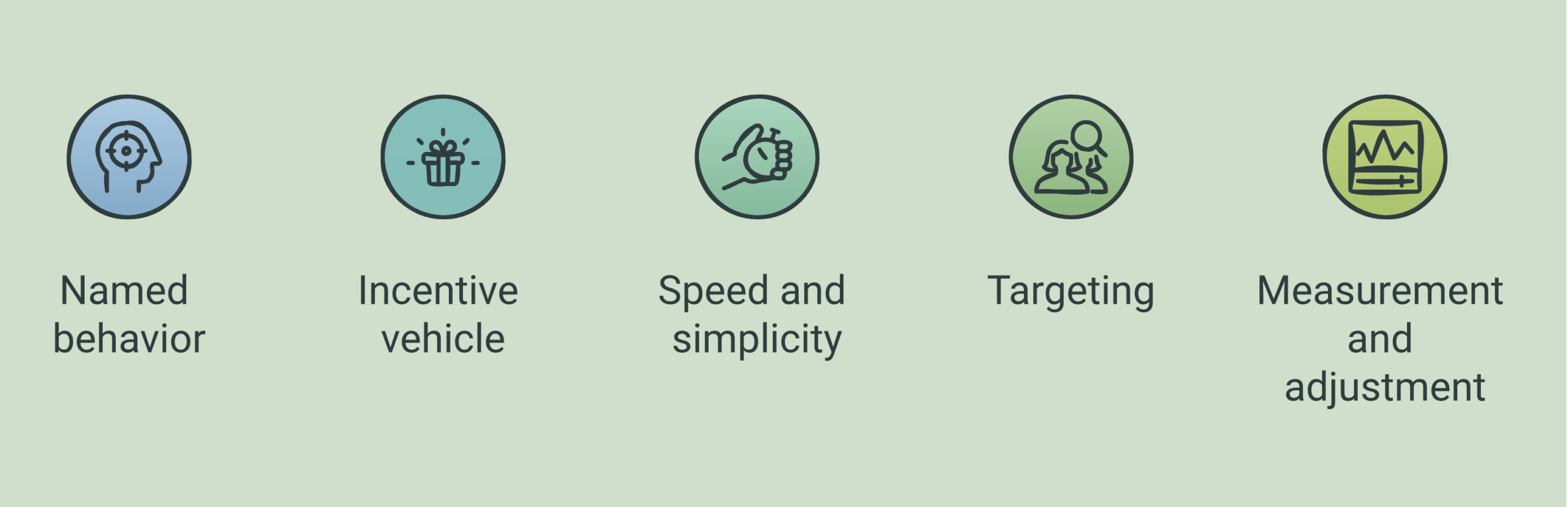
- The named behavior: state the exact action you are paying for, a booked meeting, a registered deal, a closed opportunity. If you cannot name it in a sentence, the incentive has no target and will not move anything.
- The incentive vehicle: choose the instrument that fits the behavior, a direct spiff for an individual rep’s action, deal-registration margin for protecting a partner’s price, a rebate for volume, or market development funds for a joint campaign.
- Speed and simplicity: pay fast and keep the rules short. A rep who gets a spiff days after a meeting, rather than waiting a quarter for commission, connects the reward to the action and repeats it. Complexity kills participation.
- Targeting: point the incentive at specific partners and specific accounts rather than spraying it across the whole channel. A defined account list plus a defined action is where behavior actually shifts.
- Measurement and adjustment: track what the incentive produced against the behavior you named, and cut or reshape what is not working. An incentive you do not measure is a cost you cannot defend.
The through-line is that the vehicle should follow the behavior, not the other way around. Programs start by asking how much to pay and end up with generic discounts. The better programs start by naming the missing behavior and then pick the cheapest vehicle that reliably produces it.
Common pitfalls
- Paying for no defined behavior: standing up rebates and bonuses without naming the action they buy. You end up unable to say what the spend changed, because nothing was specified to change.
- Slow, complicated payout: burying the incentive in rules and quarterly cycles. A reward the partner cannot easily earn or quickly receive does not influence the next deal.
- Spraying instead of aiming: applying the same incentive to every partner and every account. Untargeted spend lowers your margin without concentrating any behavior.
- Only rewarding the partner company, never the rep: the individual seller makes the real choice about which line to lead with. An incentive that never reaches the person doing the selling misses the decision point.
- No measurement: running incentives you never evaluate, so weak ones persist and strong ones never scale. Without tracking, you cannot tell which dollar produced pipeline.
What this looks like in practice
The version that works is narrower than teams expect. Take a reseller motion I would model this on: rather than a broad discount, the vendor set a direct spiff to the partner’s account executives, a fixed amount for a qualified meeting and a second amount for a close, paid quickly through a spiff platform rather than waiting on commission. The reps felt the reward near the action, so they booked meetings. Alongside the money went two things and only two: a short messaging template the rep could send, and a list of target accounts. That is the whole design, and its restraint is the reason it worked.
The contrast is the program that funds everything at once: co-op dollars, a tiered rebate, a portal bonus, a certification reward, all live, none measured. Partners cannot hold five incentives in their heads, so they respond to none of them, and the vendor cannot tell which line item did anything. Same budget, spread thin, producing noise instead of behavior.
The pattern repeats across channels. The constraint is almost never the size of the incentive budget, it is the discipline to pay for one named behavior, aim it at named accounts, pay fast, and measure what came back. A small, sharp incentive beats a large, vague one, and it is not close.
Forecastable’s POV
Channel incentives are where partner programs spend real money on the vaguest logic. The instinct is to ask how much to pay, when the question that decides the outcome is what behavior you are buying and whether you can see it happen. An incentive with no named action and no measurement is not a program lever, it is a leak.
At Forecastable we treat incentives as one input to partner behavior, not the whole of it. We are a partnerships operating platform focused on connecting partner conversations and actions to CRM pipeline and revenue, the flywheel that runs from conversations to actions to pipeline to revenue. An incentive names a behavior; the work we deliver as part of the service is making that behavior happen every week and tying it back to sourced pipeline, run on the Forecastable platform. Money starts a behavior. Execution sustains it.
My bet: the programs that win will run fewer, sharper incentives tied to named actions and named accounts, and will measure each one. The teams still asking only how big the rebate should be are optimizing the least important variable.
Forecastable is an independent third-party. Any tools or vendors named here are described from public information for the reader’s own evaluation, not as paid placements, and Forecastable does not resell them.
Frequently asked questions
What are channel incentives? Channel incentives are the payments and rewards a vendor gives partners to drive selling behavior. They include deal-registration margin, volume rebates, direct spiffs to individual reps, market development funds for campaigns, and relationship perks. Each is meant to influence a specific partner action.
What is the difference between a spiff and a rebate? A spiff is a direct, usually immediate reward to an individual rep for a specific action, like booking a meeting or closing a deal. A rebate is paid to the partner company, usually after the fact and tied to volume. Spiffs move individual behavior; rebates reward aggregate outcomes.
What are market development funds? Market development funds, or MDF, are vendor dollars given to a partner to run demand-generation activity, like a joint campaign or event. Unlike a spiff or rebate, MDF pays for marketing motion rather than a closed sale, and it usually requires the partner to show what the money funded.
How do you design a channel incentive that works? Name the exact behavior you want, pick the cheapest vehicle that reliably produces it, pay fast, aim it at specific partners and accounts, and measure the result. The design fails when the behavior is undefined or the payout is slow and complicated.
Should incentives go to the partner company or the individual rep? Often the rep, because the individual seller decides which product to lead with. Company-level rebates matter for the economics, but an incentive that never reaches the person doing the selling misses the point where the behavior is actually chosen.
How do you measure channel incentive effectiveness? Track the incentive against the behavior it names and the pipeline it produced, tied back to your CRM. If you cannot connect the spend to a change in partner action or sourced revenue, you cannot defend it, and you should reshape or cut it.
Next step
Look at your current incentives and, for each one, write the single partner behavior it is supposed to buy. Any incentive you cannot finish that sentence for is a discount, not a lever, and it is a candidate to cut.
If you want incentives aimed at named accounts and tied to sourced pipeline you can defend, that is the operating work we do. Start your growth journey with Forecastable and we will connect the incentive to the behavior and the behavior to revenue. Our partner program guide covers how incentives fit the wider motion.
Uncover Your Growth Potential
Schedule a Discovery Call