Head of Partnerships Job Description: A Template

What is a head of partnerships job description?
Short answer: A head of partnerships job description is the document that scopes the role responsible for a company’s partner revenue program, covering the outcomes it owns, the partner motions it runs, and the number it is measured on. It is a hiring tool, so its job is to attract the right candidate and screen out the wrong one by being specific about ownership rather than generic about “relationships.”
A good version reads like a scorecard, not a wish list. It names what the person will own, what they will be measured on, and who they will work with, so both sides know what success looks like before the offer.
Why the head of partnerships job description matters in 2026
The description matters because it is the first place a role gets mis-scoped. A posting full of “build relationships” and “develop the ecosystem” attracts candidates who are good at meetings and produces a hire nobody can hold to a number. A posting that names owned outcomes and a pipeline target attracts operators and sets the role up to be measured fairly. The document is where the future of the role is quietly decided.
In 2026 the description carries more weight because the title now usually implies revenue accountability. Leadership expects partner-influenced pipeline on the forecast, so a job description that omits attribution and co-sell execution is describing a role that cannot deliver what the company will ask of it. Writing the description around outcomes is how the hire and the expectation match from day one.
The description also has to reflect a wider ecosystem than older templates assumed. Technology partners, resellers, services firms, and referral sources behave differently, so a current description names which motions the role will run rather than implying every partner is the same. That specificity is what separates a useful posting from a generic one.
How to write a head of partnerships job description
A strong description is built in five blocks, where each block answers a question the candidate and the company both need settled. Write them in order and the posting scopes the role instead of decorating it.
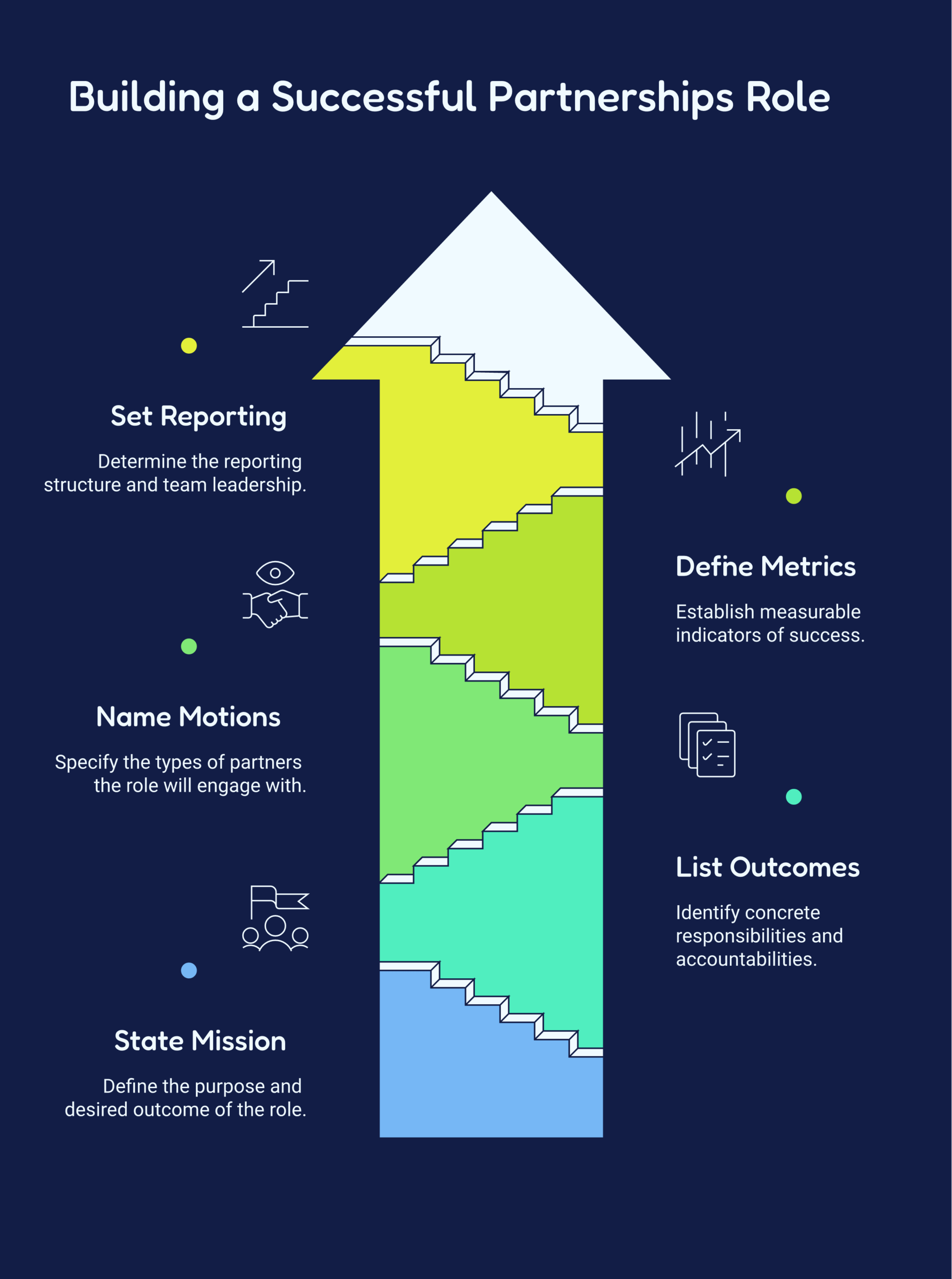
- State the mission: One or two sentences on why the role exists, framed as an outcome. “Own the partner revenue program and the pipeline it produces,” not “build and nurture partnerships.”
- List the owned outcomes: The concrete things the person is accountable for, recruiting the right partners, enabling them and sales, running co-sell, and reporting attribution. Each line is an outcome, not an activity.
- Name the partner motions: Which partner types the role will run, technology, reseller, services, or referral, so candidates self-select on fit and the scope is honest.
- Define the success metrics: The number the role is measured on, partner-sourced and partner-influenced pipeline, plus the leading indicators. This is the line most descriptions omit and the one that matters most.
- Set the reporting line and team: Who the role reports to and what team, if any, it leads. This is where the description quietly sets the seniority level.
The description is doing its job when a strong candidate can read it and know exactly what they would own and be measured on, and failing when it could be pasted under any company’s logo without changing a word.
What to include in the role overview
The overview is the part most people read first, so it has to earn attention by being specific. Lead with the mission as an outcome and the number the role carries, because that is what an operator wants to know. Follow with the partner motions the role runs and where it sits in go-to-market. Avoid the temptation to open with company boilerplate; a candidate worth hiring is reading for scope, not for the mission statement.
Keep the overview honest about stage. A first partnerships hire building one motion is a different posting than an executive inheriting a team and a board-reported number, and pretending otherwise produces a mismatch on day thirty. The overview should make the real shape of the job obvious.
What to include in responsibilities and outcomes
This section is where most descriptions go wrong by listing activities instead of outcomes. “Attend partner events” and “maintain relationships” describe motion, not results. Rewrite each line to name what the activity is supposed to produce: not “run enablement sessions” but “keep partners and sales fluent enough to register and work joint deals.” Anchor the list to the recruit-to-measure sequence so it reads as a coherent motion rather than a grab bag.
Include attribution explicitly. A description that lists recruiting and enablement but omits “own the model that tags and reports partner-sourced and partner-influenced revenue” is describing a role that will be busy and uncountable. The presence of measurement in the responsibilities is the single best signal that the company understands what it is hiring for.
What to include in qualifications and metrics
Qualifications should describe the operator you want, not a credential checklist. The useful signals are evidence of having built or run a partner motion that produced pipeline, comfort working cross-functionally with sales, and fluency in attribution. Years of experience is a weak proxy; owned outcomes in past roles is a strong one, so ask for the latter.
The metrics section is what separates a scorecard from a wish list. State the primary number the role owns, partner-sourced and partner-influenced pipeline, and the leading indicators that predict it, like activated partners and co-sell deals in motion. Naming the metrics in the posting does two things: it attracts candidates who think in outcomes, and it sets a fair, shared definition of success before anyone signs.
Common pitfalls in the job description
- Listing activities instead of outcomes: “Build relationships” and “attend events” describe motion, not results. Every responsibility should name what it is meant to produce.
- Omitting the number: A description with no success metric produces a role nobody can measure. State the partner-sourced and partner-influenced pipeline target the role owns.
- Generic boilerplate: A posting that could sit under any logo attracts candidates who fit any role and excel at none. Specificity about motion and metrics is the screen.
- Title-level mismatch: Naming a VP title with a manager’s scope, or vice versa, draws the wrong applicants. Let the reporting line and team size set the real level.
- Forgetting internal selling: A description that only covers external partner work misses half the job. Include the responsibility to win sales-org cooperation and a forecast seat.
What this looks like in practice
A founder writing the first partnerships posting started with a template full of “develop and nurture strategic relationships” and got fifty applications from people who were great in meetings and vague on results. He rewrote it around outcomes: own the partner motion end to end, run one co-sell program with a named pipeline target, instrument attribution from the first touch, report to the CRO. The application volume dropped, but the shortlist was full of operators who answered the scope questions without prompting. The rewrite did not just attract better candidates; it forced the founder to decide what the role actually owned before the first interview, which is the real value of writing the description well.
Forecastable’s POV on the job description
Our position is that the job description should read like a scorecard. The point of the document is to make the role’s ownership and number unambiguous, so the right operator recognizes the job and the wrong applicant screens themselves out. The relationship-and-ecosystem language that fills most postings does the opposite: it sounds appealing and commits to nothing, which is exactly how companies end up with a busy partnerships hire and no partner pipeline.
The second conviction is that the metric belongs in the posting, not just in the leader’s head. A role measured on a number it never saw written down is a role set up for a misaligned review. Put the partner-sourced and partner-influenced target in the description, and the company and the candidate agree on success before the offer. The description is the cheapest place to align expectations and the most expensive place to leave them vague.
The third conviction is that the description sets the seniority level whether you intend it to or not. The reporting line and team size in the posting tell candidates what rung this really is, so write them deliberately. A “head of partnerships” reporting two layers below the CRO with no team is a manager’s job wearing an executive’s title, and the mismatch will surface in the first planning cycle.
Forecastable is a partnerships operating platform; any third-party frameworks or templates referenced here are independent and naming them is not an endorsement of one format over another. Adapt the description to your own motion and stage.
Frequently asked questions
What should a head of partnerships job description include?
A mission framed as an outcome, owned responsibilities tied to the recruit-to-measure motion, the partner types in scope, the success metrics, and the reporting line and team.
What is the most important part of the job description?
The success metric. Naming the partner-sourced and partner-influenced pipeline target the role owns is what turns a wish list into a scorecard and aligns expectations before the hire.
How long should the job description be?
Long enough to be specific and short enough to be read. One screen of outcome-focused responsibilities and clear metrics beats two screens of relationship boilerplate.
What qualifications should it ask for?
Evidence of having built or run a partner motion that produced pipeline, cross-functional fluency with sales, and comfort with attribution. Prioritize owned outcomes over years of experience.
Should the description name a seniority level?
It should set the level through the reporting line and team size rather than the title alone. That keeps the role’s real rung honest and attracts the right applicants.
How do I avoid attracting the wrong candidates?
Replace activity language with outcome language, name the metric, and be specific about the motion. Generic postings attract generalists; specific postings attract operators.
What is the difference between this and a partner manager description?
The head of partnerships description scopes ownership of the whole program and often a team; a partner manager description scopes execution within the program on a defined set of partners.
Next step
If your posting is full of relationships and short on outcomes, rewrite it as a scorecard with a number. Forecastable helps leaders define the motion and metric a partnerships role will own, so the job description scopes a hire who can deliver it. Start your growth journey now to scope the role before you post it. The partner program hub frames the wider operating model, and the related head of partnerships responsibilities detail the outcomes this description should name.
Uncover Your Growth Potential
Schedule a Discovery Call