Partner Pipeline for the CFO: Making It Real

What is partner pipeline for the CFO?
Short answer: Partner pipeline for the CFO is the view of partner-influenced and partner-sourced revenue translated into the language a finance leader uses to make budget decisions, conversion rates, attribution clarity, and a defensible return on the program’s cost. It is the difference between a partnerships team that gets its budget renewed and one that has to fight for it every cycle.
The problem most partnerships leaders have with the CFO is not that the program lacks value; it is that the value is reported in a language finance does not buy. Partner-team metrics, partners recruited, deals registered, co-sells run, are activity numbers. A CFO funds outcomes, not activity, and translates everything into the same currency: revenue produced per dollar spent, with enough attribution rigor to trust it. Partner pipeline for the CFO is that translation.
The clean way to think about it is a single question the CFO is always asking: “If I give the partner program another dollar, what do I get back, and how confident can I be in the answer?” Everything you show finance should move toward answering that. A pipeline view that does not is a report the CFO reads politely and ignores.
Why partner pipeline for the CFO matters in 2026
Partnerships budgets are under the same scrutiny as every other line. The era of funding a partner program on faith and ecosystem narrative is over, and finance now applies the same return-on-investment lens to partnerships that it applies to paid marketing and sales headcount. A program that cannot present its pipeline in those terms is competing for budget with one hand tied behind its back.
The second force is attribution maturity. Finance leaders have grown sophisticated about marketing attribution and now ask the same hard questions of partnerships: what does sourced actually mean, how is influenced measured, and are you double-counting against the direct team. A partner pipeline view that cannot answer those questions cleanly reads as soft, and a CFO discounts soft numbers heavily. Attribution discipline is now table stakes for being believed.
The third force is the cost structure of the program. Partner programs carry real cost, headcount, margin given to partners, platform spend, and that cost is visible to finance. When the cost is clear but the return is fuzzy, the program looks expensive. Presenting partner pipeline in finance terms is how you put the return next to the cost, which is the only comparison the CFO actually makes when deciding whether to fund you.
How partner pipeline for the CFO actually works
Building a CFO-grade partner pipeline view runs through a sequence that moves from raw partner activity to a defensible financial story. Each step closes a question finance would otherwise use to discount the number.
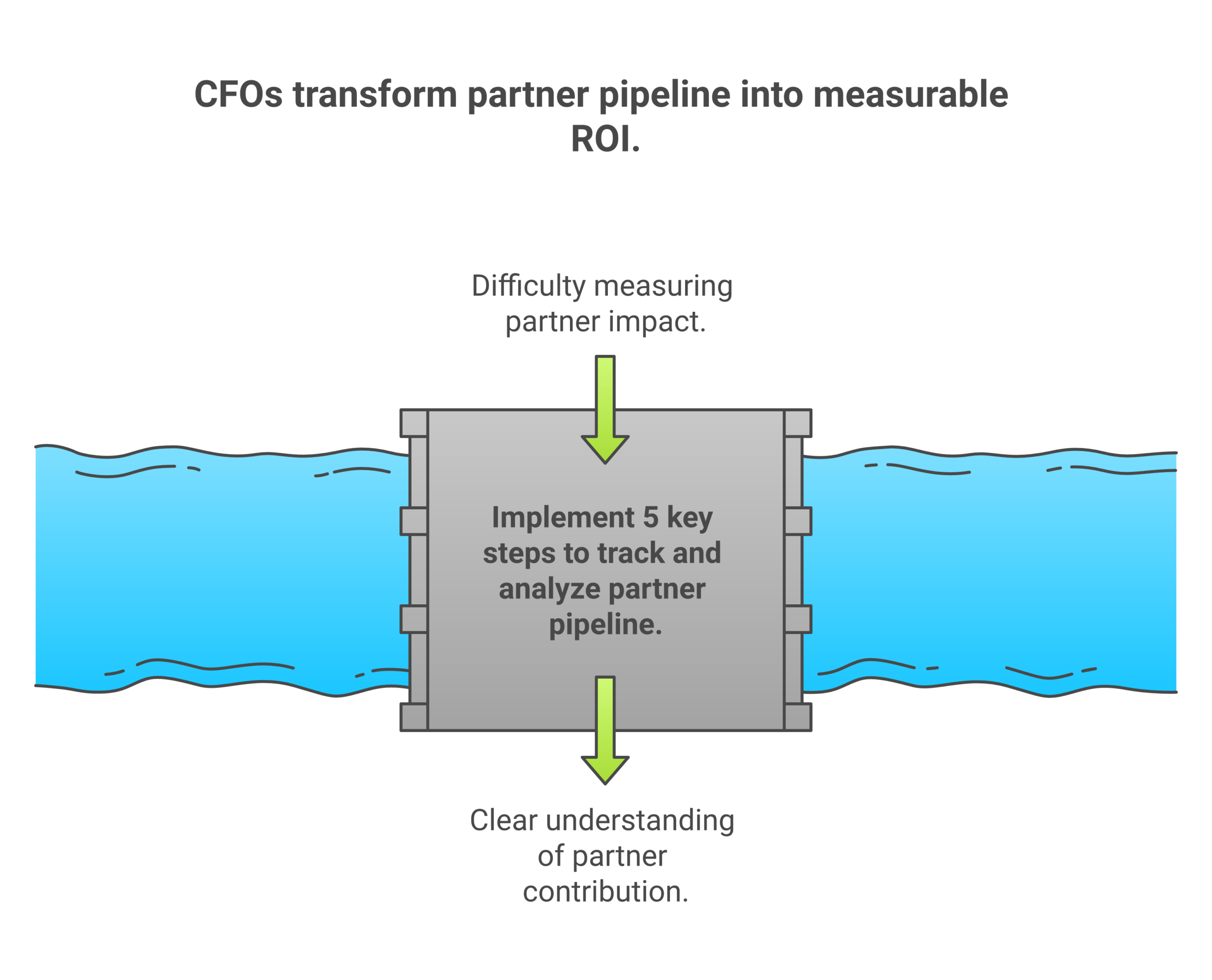
- Separate sourced from influenced, and define both: Finance needs the two cleanly split, with a written definition of each. Sourced is revenue the partner originated; influenced is revenue the partner materially helped advance. A view that blends them, or defines them loosely, invites the double-counting objection that sinks the whole presentation.
- Show conversion, not just volume: A big partner pipeline number means little without the rate at which it converts to revenue. Finance reasons in expected value, so partner pipeline that converts at a known rate is far more credible than a large raw number with no conversion history. The rate is what makes the pipeline forecastable.
- Put the return next to the cost: Lay the partner-produced revenue beside the fully loaded program cost, headcount, partner margin, and platform spend, so the CFO sees the return-on-investment directly. A pipeline view that hides the cost side reads as a sales pitch; one that shows both reads as a business case.
- Reconcile against the direct team: Pre-empt the double-counting question by showing how partner attribution is reconciled with direct-sales credit, so finance trusts that you are not claiming revenue the direct team already booked. The reconciliation is what converts a skeptical CFO into a believing one.
- Forecast the next period with a confidence range: Finance plans forward, so the view should project next period’s partner-sourced revenue with a range grounded in the conversion rates. A forecast with an honest confidence band is more useful to a CFO than a single optimistic number, because it lets them plan.
The view is rebuilt each reporting cycle from the same definitions, so the numbers are consistent quarter to quarter, which is what lets the CFO trust the trend rather than re-litigate the methodology every time.
Common pitfalls in partner pipeline for the CFO
- Reporting activity instead of outcomes: Partners recruited and deals registered are internal health metrics, not finance metrics. A CFO funds revenue per dollar, so a presentation built on activity counts answers a question finance is not asking. Lead with the financial outcome and keep activity as supporting detail.
- Blending sourced and influenced: When the two are mixed or loosely defined, finance assumes the worst and discounts the whole number. The split has to be clean and the definitions written, or the double-counting objection undermines everything you present.
- Showing return without cost: A pipeline view that presents partner revenue and never puts the program’s cost beside it reads as advocacy. The CFO makes a return-on-investment comparison regardless, so showing only the upside makes the team look like it is hiding the denominator.
- Ignoring the double-counting question: If you do not reconcile partner credit against direct-sales credit, finance will assume you are inflating, because that is the most common attribution failure they see. Pre-empting the question with a clear reconciliation is what earns the number trust.
- Changing the methodology every quarter: A view that redefines sourced and influenced each cycle forces the CFO to re-evaluate the methodology instead of reading the trend. Consistency over time is what lets finance plan around partner pipeline rather than treat each report as a one-off.
What this looks like in practice
A partnerships leader kept getting a flat budget despite a growing program, because the quarterly review led with partners recruited and co-sells run, numbers the CFO had no way to value. They rebuilt the view from the finance question backward. They split sourced from influenced with written definitions, showed each segment’s historical conversion rate, and laid the partner-produced revenue beside the fully loaded program cost to produce a clear return figure. They added a reconciliation slide showing how partner credit was netted against direct-sales credit, and forecast the next quarter with a confidence range. The CFO could finally read the return per dollar and trust it, the first clear view the program had ever given finance. The program’s budget was increased the following cycle, not because the program changed, but because the pipeline was finally presented in the currency finance actually spends.
Forecastable’s POV on partner pipeline for the CFO
The reason partnerships teams lose budget fights is almost never that the program is weak; it is that the program is reported in a language the CFO does not fund. Finance has one lens, return per dollar with enough rigor to trust, and a team that presents activity metrics is answering a different question than the one being asked. Learning to translate the program into that single lens is the highest-leverage skill a partnerships leader can develop, and most never do.
The deeper conviction is that attribution honesty wins more budget than attribution optimism. The instinct under budget pressure is to claim the largest possible number, blending sourced and influenced and skipping the reconciliation. A sophisticated CFO discounts exactly that, so the inflated number produces less funding than a smaller, cleanly-defined, reconciled one. Credibility is the scarce resource in front of finance, and it is built by showing the cost, defining the terms, and pre-empting the double-counting question before it is asked.
The candid limit is that a finance-grade pipeline view cannot rescue a program that genuinely does not produce return. The translation makes a real result legible; it does not manufacture one. A program with weak partner revenue and a beautiful CFO deck will get funded once and defunded the next cycle when the numbers do not materialize. The view is how you get credit for value that exists, not a substitute for producing it.
Forecastable is a partnerships operating platform; any third-party tools or platforms referenced here are independent third-party products, and naming them is not an endorsement of one deployment over another. Evaluate each against your own motion.
Frequently asked questions
What does a CFO actually want to see in partner pipeline?
The return per dollar spent, with enough attribution rigor to trust it. That means sourced and influenced revenue cleanly split and defined, conversion rates, the program cost placed beside the return, and a reconciliation against direct-sales credit.
How do you handle the double-counting objection?
By reconciling partner credit against direct-sales credit explicitly and showing finance the result. Pre-empting the question with a clear reconciliation, rather than waiting for it to be raised, is what earns the number credibility.
Should I report sourced and influenced together?
No. Finance trusts the two far more when they are cleanly separated with written definitions. Blending them invites the assumption that you are inflating, which causes the CFO to discount the whole figure.
What is the most common mistake in a partner pipeline presentation to finance?
Leading with activity metrics, partners recruited and deals registered, instead of financial outcomes. Those are internal health numbers a CFO cannot value, so they should support the financial story, not lead it.
How do you make partner pipeline forecastable for finance?
By attaching conversion rates to the pipeline and projecting forward with an honest confidence range. A pipeline that converts at a known rate lets finance reason in expected value, which is how they plan.
How often should the CFO view be presented?
Every reporting cycle, rebuilt from the same definitions so the methodology stays constant. Consistency over time lets the CFO read the trend and plan around it rather than re-evaluate the methodology each quarter.
Next step
If your partner reviews lead with activity counts the CFO cannot value, the move before your next budget cycle is to rebuild the view around return per dollar, split sourced from influenced with written definitions, and put the program cost beside the revenue.
Start your growth journey now to build a finance-grade partner pipeline view, or read the orientation on the [partner program](/partne
Uncover Your Growth Potential
Schedule a Discovery Call