How to Start a Partner Program: A Practical Guide

What is a partner program?
Short answer: How to start a partner program comes down to four moves: pick the one partner type that fits your motion, define what a partner does and earns, recruit a small first cohort, and instrument the program so you can see what it produces. It is a deliberate build aimed at a specific outcome, not an open-door sign-up form.
A partner program is the structured way a company recruits, enables, and rewards other companies for helping it win business. It is not a logo wall or a list of signed logos, it is a defined motion that produces pipeline, referrals, or co-sell with partners who have a reason to participate.
Why knowing how to start a partner program matters in 2026
Knowing how to start a partner program matters in 2026 because partner-influenced revenue is now a number leadership expects to see, and you cannot produce it without a program that recruits the right partners and tells them what to do. A program started badly produces a long signed-partner list and no revenue, which is the most common failure in the category.
The second reason is focus. Most early programs try to be everything to every partner type at once, and the effort scatters. Knowing how to start a partner program means choosing one motion first, proving it works, and only then widening, so the first cohort actually produces instead of sitting idle.
How to start a partner program, step by step
Starting a partner program works when you build it in a defined order rather than launching a sign-up page and hoping partners arrive and figure it out.
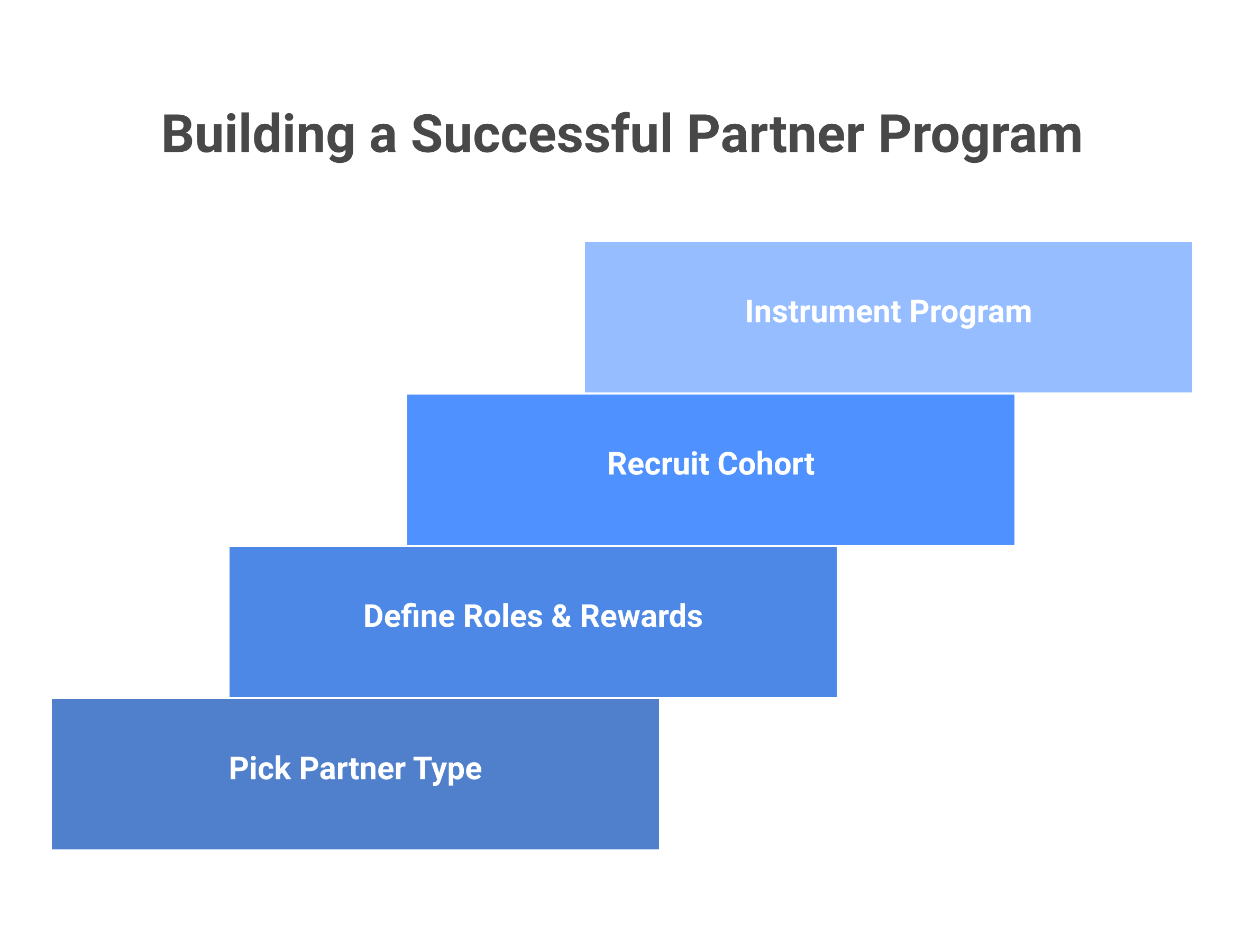
- Pick the one partner type that fits your motion: Decide whether your first partners are technology partners, services or channel partners, or referral sources, based on where your deals already get help. A program aimed at one partner type you understand beats a program open to every type you do not.
- Define what a partner does and earns: Write down the specific action you want a partner to take and the specific reward they get for it, whether that is a referral fee, a margin, or co-sell support. A partner who cannot tell what they are supposed to do or what they get will do nothing.
- Recruit a small first cohort: Bring on a handful of partners who already have a reason to work with you rather than a hundred who signed for the badge. A first cohort small enough to support by hand is what lets you learn what the program needs before you scale it.
- Instrument the program so you can see what it produces: Set up the tracking that tells you which partner sourced or influenced which deal before you launch, not after. A program you cannot measure cannot be managed, and the number leadership asked for has to come from somewhere you can point to.
You are starting a partner program well when a first partner can name what they do, what they earn, and who to call, and badly when you have signatures but no partner has taken a single defined action.
Common pitfalls when starting a partner program
- Recruiting for volume over fit: Signing as many partners as possible feels like progress and produces a list nobody sells with. Start with the few partners who have a real reason to participate, not the most logos.
- No defined partner action: A program that never says what a partner is actually supposed to do leaves every partner guessing. Name the specific action and the reward before you recruit anyone.
- Launching with no tracking: Standing up the program first and figuring out measurement later means the first wins cannot be attributed and the number cannot be defended. Instrument attribution before launch.
- Trying every partner type at once: A program that opens to technology, services, and referral partners simultaneously spreads thin support across motions you have not proven. Pick one, prove it, then widen.
What this looks like in practice
A founder-led software company decided it needed a partner program because two deals had closed the prior quarter with help from an implementation firm. Instead of building a sign-up page and recruiting broadly, the team named the one partner type that had already helped, services firms who implement their category, and built only for that. They wrote down the single action they wanted, a warm introduction into an active deal, and the reward, co-sell support plus a referral fee at close. They recruited five firms that already had customers in the target market, set up attribution in their CRM so every partner-touched deal was tagged from the first conversation, and launched to those five. Within two quarters the five firms had sourced more pipeline than the company’s outbound team produced in the same window, not because the program was large but because it was aimed, defined, and measured from the start.
Forecastable’s POV on how to start a partner program
The position we hold is that a partner program is a motion you build, not a door you open. The teams that struggle launch a sign-up page, collect logos, and wait, then conclude partnerships do not work. The teams that succeed pick one partner type, define one action and one reward, and recruit a small cohort they can support by hand, then widen only once that motion produces.
The second conviction is that attribution comes first, not last. The single most common reason a new program cannot defend its existence is that nobody instrumented it, so the wins it did produce are invisible. Set up the tracking before launch, so the first partner-sourced deal is countable the day it lands.
The honest caveat is that a focused program means saying no to partner types and partners that do not fit the first motion, and that feels like turning away help. Early on, a small aimed program beats a large unfocused one every time, and the discipline to stay narrow is what gets the program to the point where widening is worth it.
Forecastable is a partnerships operating platform; any third-party tools or platforms referenced here are independent third-party products, and naming them is not an endorsement of one deployment over another. Evaluate each against your own motion.
Frequently asked questions
What are the first steps to start a partner program?
Pick the one partner type that fits your motion, define what a partner does and earns, recruit a small first cohort, and instrument the program so you can track what it produces. The order matters, aim and measurement come before scale.
How many partners should a new program start with?
Few enough to support by hand, usually a handful with a real reason to participate. A small first cohort lets you learn what the program needs before you widen it, where a large one just produces an idle list.
Which partner type should I start with?
The one that already helps your deals, whether technology, services, channel, or referral partners. Building for a partner type you understand and already work with beats opening to every type at once.
What does a partner program need before launch?
A defined partner action, a defined reward, a first cohort, and attribution tracking in place. The tracking is the piece most teams skip, and skipping it makes the first wins impossible to count.
How do I know the program is working?
A partner can name what they do, what they earn, and who to call, and partner-touched deals show up tagged in your pipeline. Signatures alone are not a working program, defined action and measurable output are.
Next step
If you have had a deal close with a partner’s help but no program to repeat it, the move is to name that one partner type, define the action and reward, and recruit a small cohort you can support by hand before you scale anything.
Start your growth journey now to build a partner program aimed at a real motion, or see the orientation on the partner program for how the pieces fit together.
Uncover Your Growth Potential
Schedule a Discovery Call