Partner-Sourced Pipeline: Building It on Purpose

What is partner-sourced pipeline?
Short answer: Partner-sourced pipeline is the total value of open opportunities that a partner originated rather than your own sellers, tracked through the same stages as the rest of your pipeline. It measures how much potential revenue the partner channel is actually creating, as opposed to how many partners you have signed or how active the relationships feel.
Most programs report partner counts and activity because those numbers are easy to produce. Partner-sourced pipeline is harder and far more useful, because it is the number that connects partnerships to revenue and the one a CRO will actually plan against.
The distinction that matters is sourced versus influenced. Sourced pipeline is the deal the partner originated; influenced pipeline is a deal the partner helped along but did not start. Both have value, but conflating them is how programs end up claiming credit for revenue they did not create.
Why partner-sourced pipeline matters in 2026
Partnerships budgets are judged on pipeline contribution, and a program that cannot show sourced pipeline is judged on activity, which never survives a downturn. In 2026, with revenue teams scrutinizing every channel, sourced pipeline is the number that justifies a partnerships function existing at all.
The second reason is planning. A sales leader builds the forecast from pipeline, and if partner-sourced pipeline is invisible or unreliable, the partner channel is left out of the plan entirely. Visible, trustworthy sourced pipeline is what earns partnerships a seat in the forecast conversation.
The third reason is that sourced pipeline forces the program to build deliberately rather than hope. When the metric is partner count, a program optimizes for signing partners; when the metric is sourced pipeline, it optimizes for partners who actually originate deals, which is a completely different and far more productive set of activities.
How partner-sourced pipeline actually works
Building sourced pipeline on purpose means treating it as an output to engineer, not a number to report after the fact, and the value is in the activities that feed it.
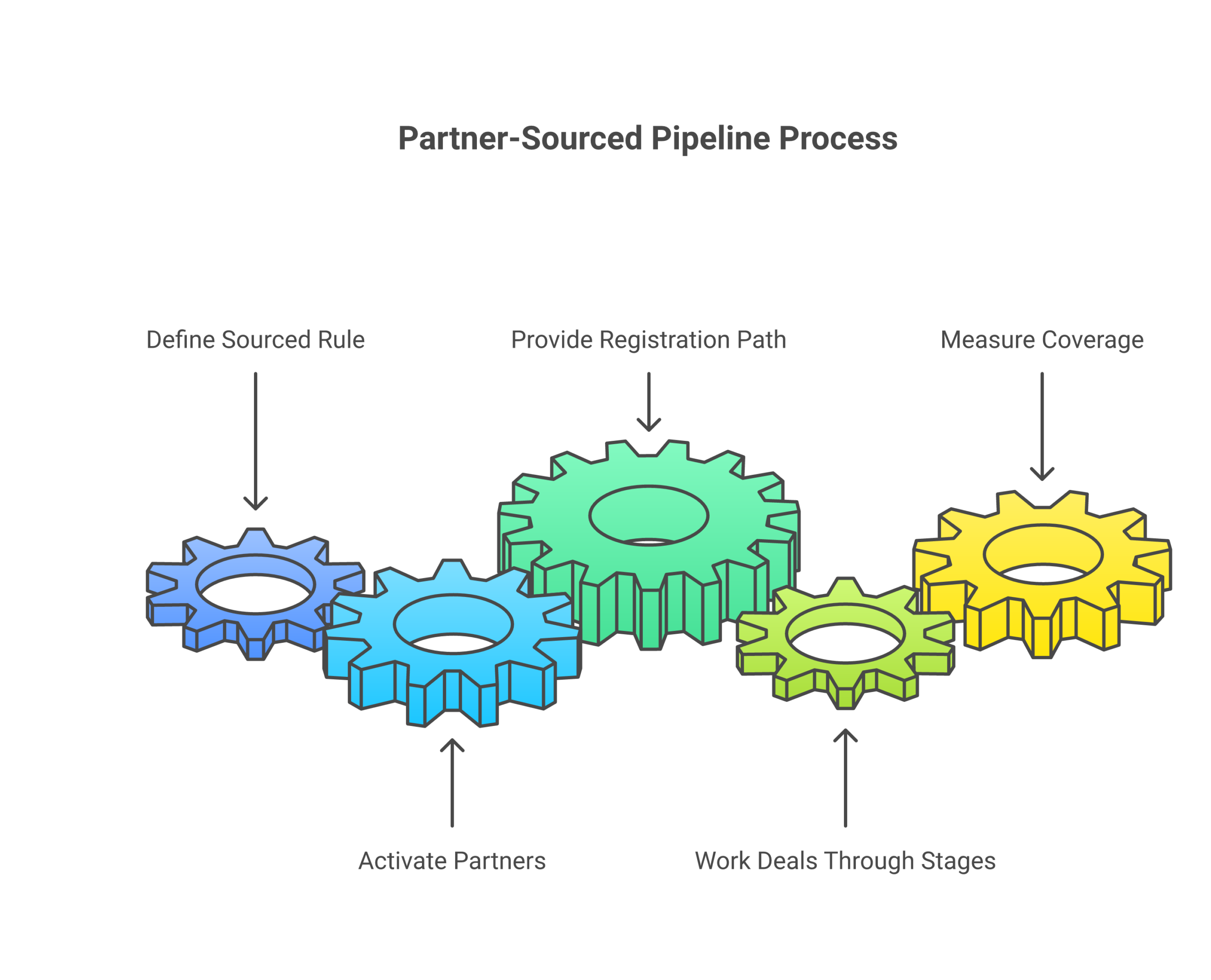
- Define sourced with one clear rule: Set a single, defensible definition of what makes a deal partner-sourced, registered by the partner before your team engaged, so the number is not inflated by deals you already had. A loose rule turns sourced pipeline into a vanity figure no one trusts.
- Activate the partners who can actually source: Focus enablement on the partners positioned to originate deals, not on the whole roster, because most partners never source anything and spreading effort evenly produces a thin pipeline. The few who can source are where the activity belongs.
- Give partners a reason and a path to register: Make it easy and worthwhile for a partner to bring and log a deal, a clear registration step, a credit rule, a fast response, so opportunities enter the pipeline instead of dying in a partner’s inbox. Friction at registration is where sourced pipeline leaks before it starts.
- Work the sourced deals through real stages: Move partner-originated deals through the same qualified stages as direct pipeline so the value is real and not just logged. Sourced pipeline that never advances is a number, not revenue, and the program has to actually close it.
- Measure coverage against the target: Track sourced pipeline against the revenue the channel is expected to produce, so you can see whether the channel is building enough to hit its number. Coverage is what turns sourced pipeline from a backward-looking report into a forward-looking plan.
The number is read against its own trend and against coverage targets, so the program can tell whether its sourcing activity is building enough pipeline to matter rather than just accumulating deals of unknown quality.
Common pitfalls in partner-sourced pipeline
- Counting influenced deals as sourced: The most common inflation is claiming a deal the partner merely touched as one the partner originated. Sourced and influenced are different metrics, and blending them destroys the credibility of both.
- Optimizing for partner count: A program that measures signed partners builds a large roster that sources nothing, because signing a partner and activating one are unrelated activities. Sourced pipeline only grows when the program optimizes for origination.
- Logging pipeline that never advances: Sourced pipeline that sits unqualified inflates the number and collapses when the deals are scrubbed. The deals have to move through real stages to count as pipeline rather than wishful logging.
- Spreading enablement across the whole roster: Most partners will never source a deal, so enabling all of them equally produces thin results. The pipeline grows when effort concentrates on the partners actually positioned to originate.
- Reporting sourced pipeline with no coverage target: A pipeline number with nothing to measure it against tells you nothing about whether the channel will hit its goal. Coverage against a target is what makes the number a plan instead of a status update.
What this looks like in practice
A growth-stage company reported a large partner roster and frequent partner activity, but its sales leader left the partner channel out of the forecast because no one could show what it would actually produce. The partnerships team rebuilt around sourced pipeline. They wrote one rule, a deal counted as sourced only if the partner registered it before any seller engaged, and the reported number dropped sharply because most of what had been claimed was influenced or pre-existing. From that honest base, they concentrated enablement on the eight partners positioned to originate deals, simplified the registration step, and set a fast response commitment. Within two quarters, sourced pipeline measured against a coverage target was real enough that the sales leader built it into the forecast. The roster did not grow; the number did, because the program started engineering origination instead of counting partners.
Forecastable’s POV on partner-sourced pipeline
Sourced and influenced should never share a number, and most programs blur them on purpose. Influenced pipeline is easy to inflate because almost any deal can be said to have been touched by a partner, and a program under pressure to show contribution will reach for it. The discipline of reporting sourced pipeline by a strict definition is what makes the channel believable, and believability is the entire point of the metric.
The second conviction is that sourced pipeline is built, not reported. Treating it as a number you measure after the fact misses the lever, which is the deliberate activity of activating the few partners who can source and removing the friction that stops them from registering. A program that only reports the number will watch it stay flat; a program that engineers the inputs will watch it grow.
The candid limit is that not every program should chase sourced pipeline as its primary metric. Some channels are genuinely about influence, co-selling into deals your team already has, and forcing a sourced number onto an influence motion distorts behavior. The metric has to match the motion, and pretending an influence channel is a sourcing channel produces bad incentives and worse data.
Forecastable is a partnerships operating platform; any third-party tools or platforms referenced here are independent third-party products, and naming them is not an endorsement of one deployment over another. Evaluate each against your own motion.
Frequently asked questions
What is the difference between partner-sourced and partner-influenced pipeline?
Sourced pipeline is deals the partner originated before your team engaged; influenced pipeline is deals the partner helped advance but did not start. Both have value, but they are different metrics and should be reported separately to stay credible.
How do you define a partner-sourced deal?
With one strict, defensible rule, most commonly that the partner registered the opportunity before any of your sellers engaged it. The exact rule matters less than applying it consistently so the number cannot be inflated.
Why does partner-sourced pipeline matter more than partner count?
Because partner count measures activity and sourced pipeline measures revenue potential. A large roster that sources nothing contributes no pipeline, while a few active partners can source a meaningful number. Pipeline is what connects partnerships to the forecast.
How do you grow partner-sourced pipeline?
Concentrate enablement on the partners actually positioned to originate deals, remove friction from registration, give partners a clear credit rule and a fast response, and work the sourced deals through real stages. The number grows when you engineer the inputs.
Should every partner program track sourced pipeline?
Most should, but the metric must match the motion. A channel built on co-selling into existing deals is an influence motion, and forcing a sourced metric onto it distorts behavior. Track what the channel is actually built to do.
How do you keep sourced pipeline from being a vanity number?
Use a strict definition, separate it from influenced pipeline, require deals to advance through real stages, and measure it against a coverage target. Those four disciplines keep the number honest and useful.
Next step
If your partner channel is left out of the forecast because no one can show what it produces, the move this week is to write one strict definition of sourced pipeline and re-measure the channel against it, even if the honest number is smaller.
Start your growth journey now to build partner-sourced pipeline you can put in the forecast, or read the orientation on the partner program for the broader operating model.
Uncover Your Growth Potential
Schedule a Discovery Call