Partner Program Design Consulting: What to Expect

What is partner program design consulting?
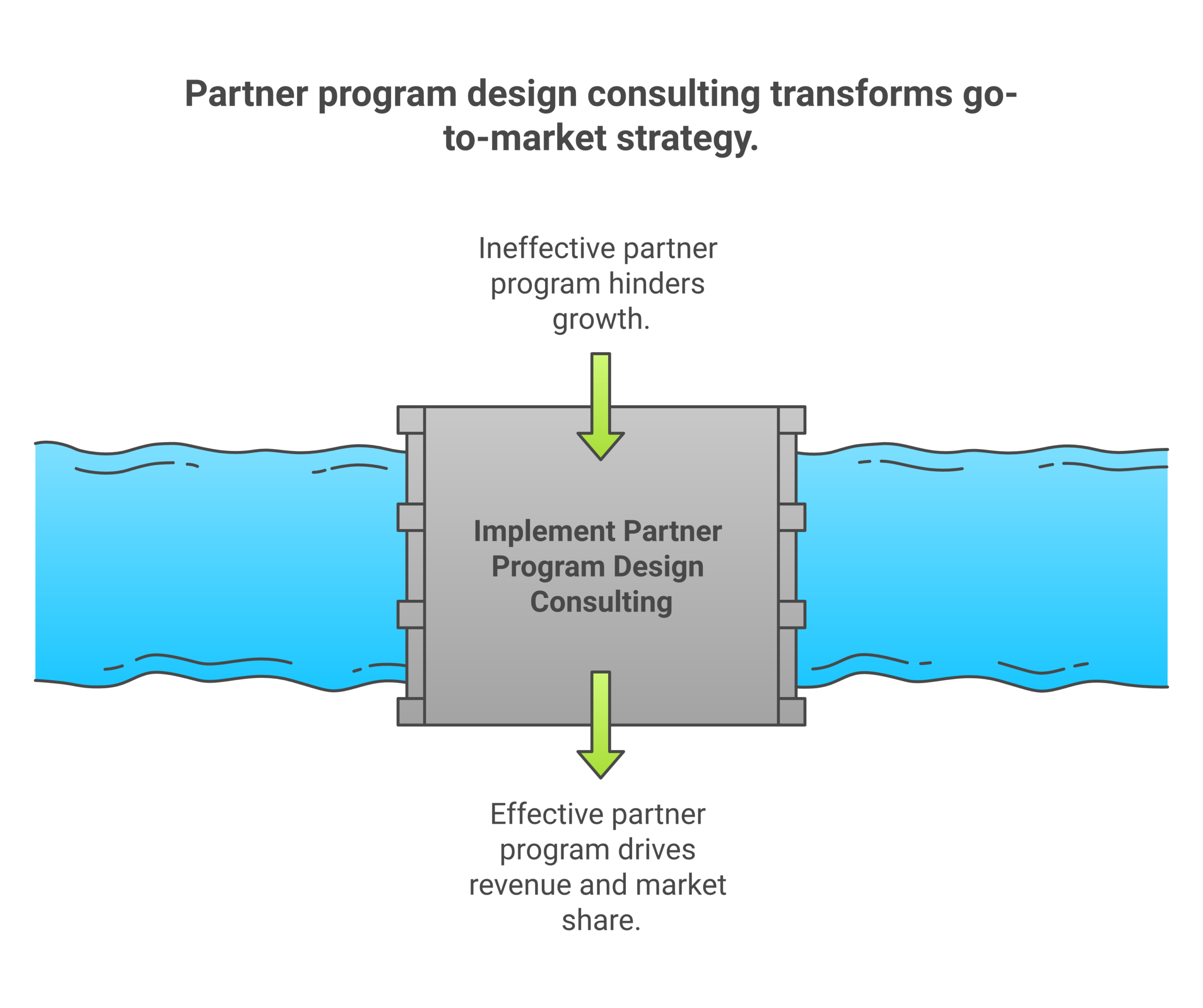
Short answer: Partner program design consulting is outside expertise hired to architect or rebuild a partner program, covering partner types, tiers, incentives, enablement, and metrics. It compresses the learning curve a team would otherwise pay for in wasted quarters, and it brings patterns from many programs to a company building or fixing one.
The reason companies buy it is rarely a shortage of effort. It is a shortage of pattern recognition. A team building its first program is solving problems that a consultant who has built dozens has already seen fail and succeed.
The useful frame is that you are buying compressed time and avoided mistakes. A good engagement does not hand you a generic template; it adapts proven structures to your go-to-market and leaves your team able to run what was designed. The deliverable is a working program, not a document.
Why partner program design consulting matters in 2026
Partnerships has become strategic faster than most companies have built the internal expertise to run it. A company can decide partnerships is a priority and discover it has no one who has actually designed a program, which is exactly the gap consulting fills. The demand has risen because the ambition has outrun the in-house experience.
The second force is the cost of a bad first design. A program built on the wrong structure wastes a year and a roster of partners before anyone admits it needs rebuilding, and that wasted year is far more expensive than the engagement that would have prevented it. Consulting is increasingly bought as insurance against that specific cost.
The third force is the speed expectation. Leadership wants partnerships producing on a timeline that does not allow for slow internal trial and error, so bringing in someone who has done it before is how teams hit an aggressive ramp. In 2026 the question is less whether to get help and more how to buy it well.
How partner program design consulting actually works
A good engagement runs in a recognizable sequence, and knowing it helps a buyer tell real consulting from a slide deck with an invoice attached.
- Diagnose the current state and the go-to-market fit: The engagement starts by understanding the company’s sales motion, ICP, and existing partners, not by presenting a framework. A consultant who arrives with the answer before understanding the business is selling a template, not a design.
- Design the structure to fit, not a generic best practice: The output is partner types, tiers, incentives, and enablement adapted to how this company actually sells. A design that would work for any company works for none of them, so the fit to the specific motion is the whole value.
- Build the operating artifacts the team will use: Good consulting leaves behind the tier definitions, the incentive model, the enablement path, and the metric framework as usable artifacts, not a strategy narrative. The team has to be able to run the program from what was delivered.
- Transfer the capability to the internal team: The engagement should make the internal team able to operate and evolve the program without the consultant, through working sessions and documented decisions. A design that only the consultant understands creates dependence, which is a failure mode, not a feature.
- Define the first ninety days and the success metric: A real engagement ends with a concrete plan for the first quarter and a named metric to judge it by. Consulting that delivers a structure but no path to execute it leaves the hardest part undone.
The best engagements are scoped to end, with the internal team owning the program and the consultant available for specific follow-on rather than embedded indefinitely.
Common pitfalls in partner program design consulting
- Buying a template dressed as a design: Some engagements deliver the same structure to every client with the logo changed. A design that is not adapted to your specific go-to-market is worth little, so probe for how the recommendation depends on your business.
- Paying for a deck with no execution path: A polished strategy document that does not say what to do in the first ninety days leaves the buyer with the hardest work undone. Insist the engagement includes the operating artifacts and a concrete starting plan.
- No capability transfer: An engagement that leaves the program legible only to the consultant creates a dependence that costs more later. Good consulting makes the internal team able to run and evolve what was designed.
- Scoping with no end: Open-ended engagements drift into doing the team’s job rather than building its capability. A design engagement should have a defined endpoint where ownership moves in-house.
- Hiring before the basics are decided: Bringing in a consultant before the company has decided whether partnerships fits its motion at all can produce a beautiful design for a program that should not exist. Some diagnosis questions are worth answering internally first.
What this looks like in practice
A Series B company had stood up a partner program internally, watched it stall, and brought in design consulting to figure out why. The consultant spent the first two weeks not on frameworks but on the company’s sales motion, and found the root problem: the program had been built for resellers, but the company’s deals actually closed through technology integrations and co-sell. The redesign reorganized the program around technology partners, rebuilt the incentive from reseller margin to co-sell credit, and mapped an enablement path aimed at integration-led deals. Crucially, the engagement ran as a series of working sessions with the internal team rather than a delivered report, so the partnerships hire could run the new structure herself. The engagement ended at ninety days with a metric and a plan. Six months later the program was producing, and the company had an internal owner who understood why the design worked, not just a document describing it.
Forecastable’s POV on partner program design consulting
The test of good design consulting is whether the team can run the program without the consultant when it ends. The failure mode of the category is the engagement that creates dependence, where the program only makes sense to the person who designed it and the client has to keep paying to keep it alive. Real consulting transfers the capability and then leaves.
The second conviction is that fit beats best practice every time. The valuable thing a consultant brings is not a framework that worked elsewhere but the judgment to adapt structure to your specific motion, and a recommendation that would suit any company is a sign the diagnosis was skipped. Buyers should reward consultants who can explain why their design depends on the particulars of the business.
The candid limit, said plainly by a firm that does this work, is that consulting cannot substitute for an internal owner. A great design handed to a company with no one to run it will decay, so the highest-value engagements often start by helping the company get the right internal hire in place. Outside help accelerates a program; it does not replace the person who has to own it.
Forecastable is a partnerships operating platform; any third-party tools or platforms referenced here are independent third-party products, and naming them is not an endorsement of one deployment over another. Evaluate each against your own motion.
Frequently asked questions
When should a company hire partner program design consulting?
When the ambition for partnerships has outrun the internal experience to build it, or when an existing program has stalled and the team cannot diagnose why. Hiring before deciding whether partnerships fits the motion at all is usually premature.
What should a design consulting engagement actually deliver?
Operating artifacts the team can run, the partner types, tier definitions, incentive model, enablement path, and metric framework, plus a concrete first-ninety-days plan. A strategy narrative with no execution path leaves the hardest work undone.
How long does a partner program design engagement take?
Most run somewhere between one and three months for the design itself, depending on the program’s complexity and the number of partner types. The key feature is that it has a defined endpoint where ownership moves to the internal team.
How do I avoid paying for a generic template?
Ask the consultant to explain how their recommendation depends on your specific go-to-market. A design that does not change based on how you actually sell is a template, and an engagement that diagnoses before designing is the signal you want.
Can consulting replace a partnerships hire?
No. Consulting accelerates the design and avoids early mistakes, but a program with no internal owner to run and evolve it will decay. The best engagements often help the company get the right hire in place rather than substituting for one.
What is the biggest risk in a design consulting engagement?
Dependence. If the program only makes sense to the consultant who built it, the company keeps paying to keep it running. Insist on capability transfer so the internal team can operate the design after the engagement ends.
Next step
If you are weighing outside help for your program, the move this week is to write down the specific decisions you need made, partner types, incentives, enablement, and then evaluate any consultant on whether their engagement transfers that capability to your team or just delivers a deck.
Start your growth journey now to scope a design engagement that leaves your team able to run the program, or read the orientation on the partner program for the broader operating model.
Uncover Your Growth Potential
Schedule a Discovery Call