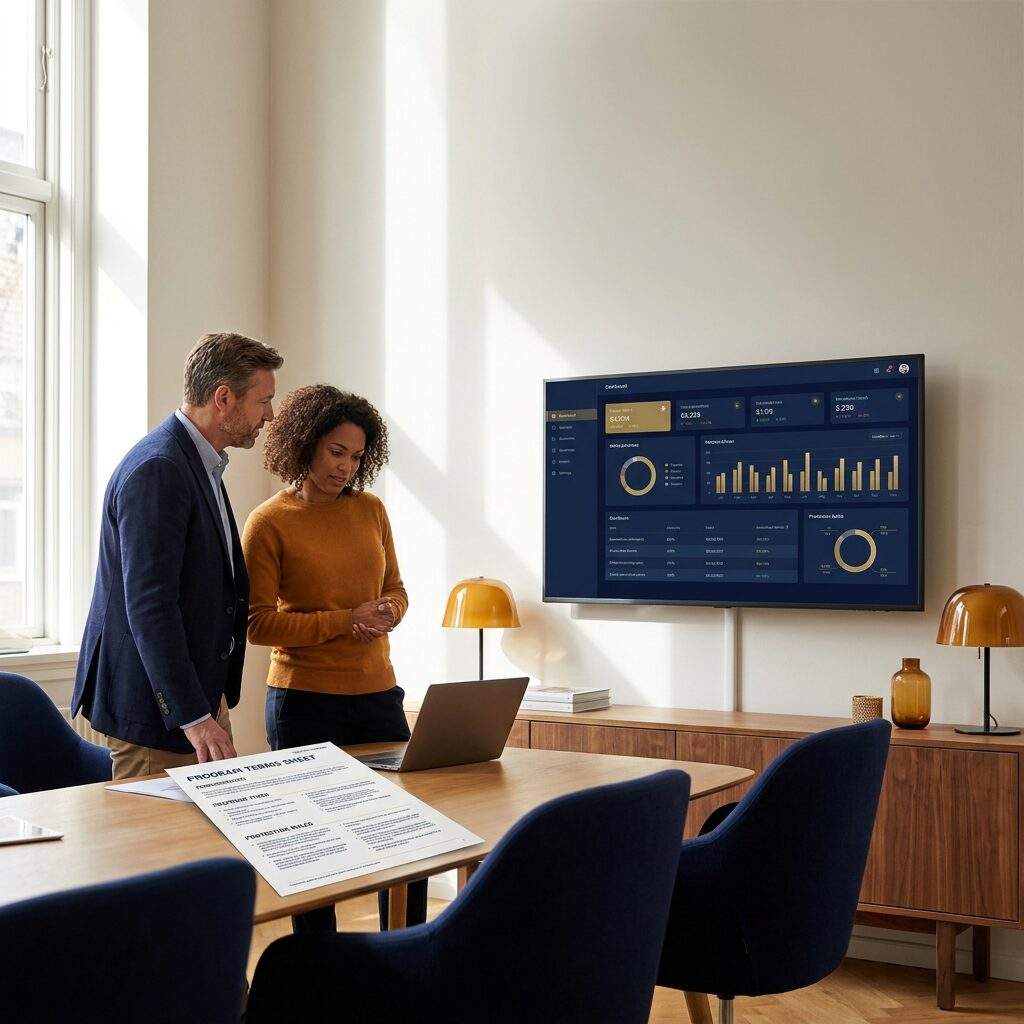
Executive Alignment Meeting: A 2026 Operating Playbook

What is an executive alignment meeting?
Short answer: An executive alignment meeting is a quarterly, ninety-minute working session between the most senior revenue leaders at two partnering companies, structured to produce a one-page artifact with a joint number, the next quarter’s commitments, and the reciprocal asks each side owes the other. It is not a status update; it is the room where the partnership’s direction gets set or reset.
The meeting fails when it becomes a presentation. Two slide decks, polite questions, no decisions, and a follow-up calendar invite three months later. That version is theater and consumes the most expensive calendar time in the business.
A working executive alignment meeting is the opposite. Fewer slides, more dialogue, a written output, and a clear decision log.
Why the executive alignment meeting matters in 2026
The executive alignment meeting is doing more work in 2026 than it did three years ago, and for three specific reasons.
First, partner-influenced revenue is a board metric now. CROs walk into board meetings with a joint pipeline number they have to defend, and the executive alignment meeting is where that number gets agreed and refreshed. A CRO without a working partner of the same seniority on the other side of a recurring meeting has a defensible number on one side only.
Second, the cost of misalignment is higher. When AE attention is scarce and partner attention is scarce, a misallocated quarter costs both sides real revenue, not just opportunity. The meeting is the cheapest place to catch misallocation early.
Third, the executive alignment meeting is the one cadence the field reads as a leadership signal. When the CRO holds the meeting every ninety days, partner managers and AEs adjust the rest of the motion to it. When the CRO cancels twice in a row, the field correctly concludes that the partnership has slipped in priority.
How an executive alignment meeting actually works
A working executive alignment meeting runs on a five-part structure. Each part has a fixed time and a single artifact.
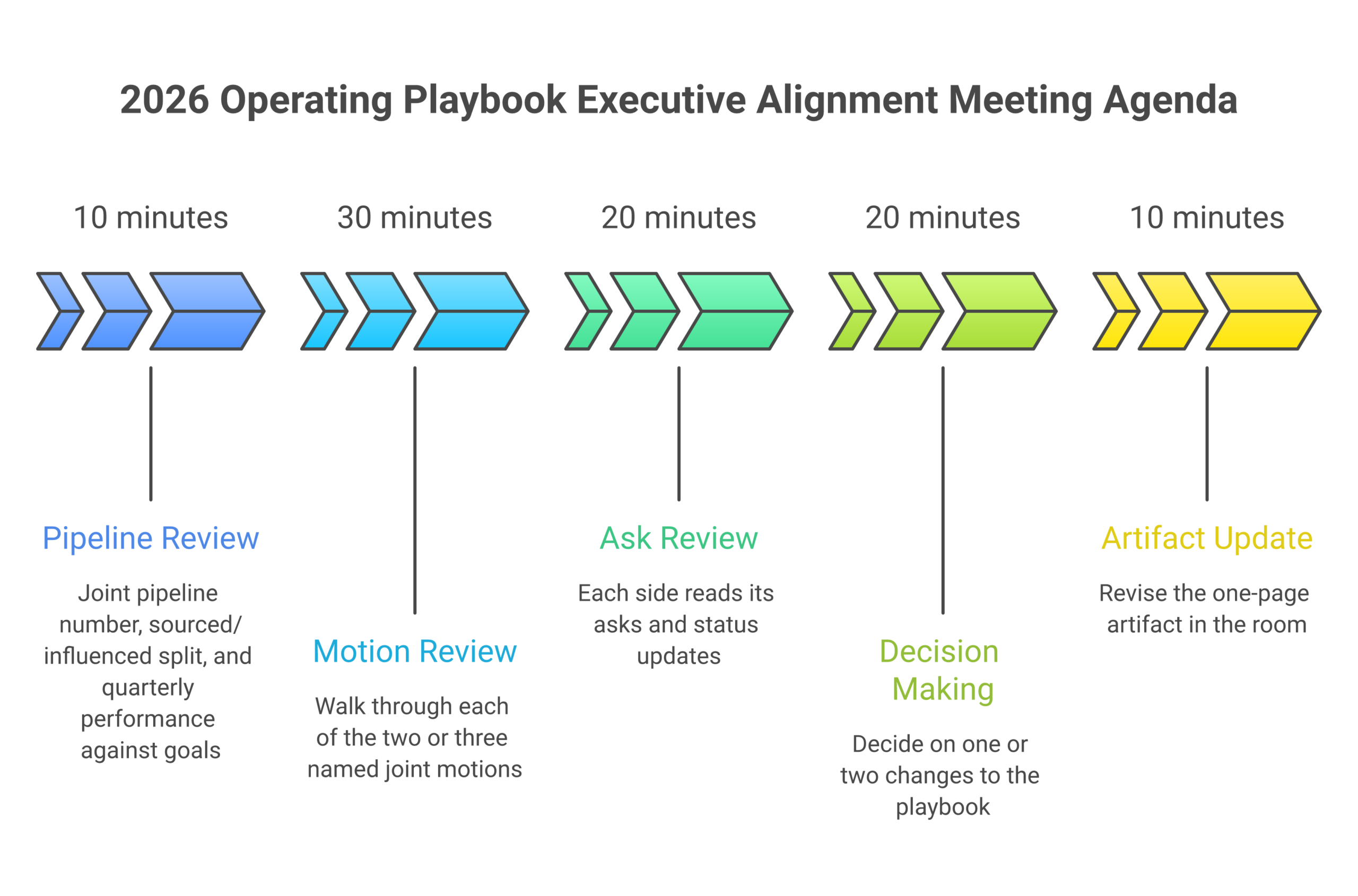
- Open with the number, ten minutes: Start with the joint pipeline number, the sourced and influenced split, and how the quarter actually came in against commit and upside. No setup, no preamble, no slide animations. The number is the meeting’s anchor.
- Review the motions, thirty minutes: Walk each of the two or three named joint motions in turn. What worked, what produced, what stalled, and the one change being proposed. Five to ten minutes per motion. Anything that takes longer than ten minutes is a sign the motion has too many open questions for an executive room.
- Review the asks, twenty minutes: Each side reads its asks of the other and the status. Delivered, in progress, blocked, or dropped. Asks that were never delivered get a frank conversation about whether the ask was wrong, the timing was wrong, or the priority was wrong. Then the next quarter’s asks get named.
- Decide one or two changes, twenty minutes: This is the only part of the meeting that is real working time. What changes about the motion, the account set, the named owners, the cadence, or the asks. A meeting that walks out with no decision was a status meeting, not an alignment meeting.
- Update the one-page artifact, ten minutes: The artifact gets revised in the room. Both leaders confirm the revisions verbally before they leave. The revised artifact is sent to both organizations within twenty-four hours.
The cadence is quarterly. The room is two senior leaders per side at minimum, often four, sometimes finance from one or both sides on the year-end review.
Common pitfalls
The executive alignment meeting fails in patterns that show up across companies and verticals.
- Slide-led instead of artifact-led: Two slide decks, two presentations, an hour gone before either side has said a hard thing. The meeting should open the one-page artifact and work from it, not present new material.
- No prework: The number, the asks status, and the motion review packets land in the room cold. Senior leaders read while listening, miss the nuance, and the room defaults to politeness. Prework goes out three business days ahead.
- Too many attendees: Twelve people in the room means no decisions get made. Cap at four to six per side, with the right people, not the available people.
- The motion review becomes a campaign report: Five-minute campaign updates eat the room. Executive review is about whether the motion is producing, not about every webinar and email send.
- No decision log: The meeting ends with a vague “we will follow up.” Six weeks later nobody remembers what was decided. A short decision log inside the artifact fixes this permanently.
What this looks like in practice
The executive alignment meeting runs on artifacts more than software. A small stack supports the meeting.
A cybersecurity vendor and a Tier 1 reseller ran the executive alignment meeting on the third Thursday of each quarter, ninety minutes, six attendees per side, prework out the prior Friday. The Q1 meeting changed the account set from one hundred and twelve named accounts to forty-seven after the broader set produced thin pipeline. The Q2 meeting dropped one of the three motions when it had produced under five percent of forecast. The Q3 meeting added a finance attendee from the reseller side after the joint number became a board metric. Year-end pipeline came in seventy-eight percent of stretch, which is unusual; the post-mortem credited the willingness to kill the under-producing motion in Q2.
The contrast is two firms whose executive alignment meeting ran on the same calendar but reverted to slide presentations. Year three, the partnership produced two percent of forecast and was unwound the next year. The meeting had been held; the meeting had not been used.
Forecastable’s POV
The executive alignment meeting is the most expensive recurring calendar slot a partnership owns. Two CROs and their teams together are easily ninety minutes of seven-figure-a-year time per quarter. Most partnerships waste it.
The waste is not from bad intent. It is from inheriting a meeting format that was designed to present, not to decide. Slide decks reward presenters; one-page artifacts reward dialogue. A meeting built around an artifact almost always produces a real decision, because the room is staring at the same paragraph and someone has to change the words.
The discipline we recommend is simple to state and hard to install. Open with the number. Walk the motions, not the campaigns. Review every ask from last quarter and read the next quarter’s aloud. Decide one or two changes in the room. Update the artifact while everyone watches. Send within twenty-four hours.
A partnership that runs this meeting four times in a row, in the same format, with the same artifact updated each time, builds a public record of its own discipline. That record is what finance, the board, and the field all read when they decide how much of their attention this partnership gets.
Vendors named above are listed as independent third-party providers Forecastable has worked alongside. Forecastable does not endorse a single tool category leader and recommends independent third-party evaluation against your own ecosystem before any purchase.
Frequently asked questions
How long should an executive alignment meeting run?
Ninety minutes. Longer than that and the energy dies; shorter than that and the motion review gets rushed.
What is the right cadence?
Quarterly is the cadence that catches drift without becoming noise. Monthly is too tactical for senior leaders; annual is too slow.
Who attends an executive alignment meeting?
The CRO and the head of partnerships from each side at minimum. Finance from at least one side on the year-end review. Optional: head of marketing if a joint demand motion is in the plan.
What is the prework?
Joint pipeline numbers, the status of every ask from the prior quarter, and a one-page motion review packet for each named motion. Out three business days ahead.
What is the output?
A revised one-page artifact and a short decision log. Both go out within twenty-four hours.
What happens if one CRO repeatedly cancels?
The partnership has slipped in priority for that side. The meeting itself is a leading indicator of partnership health; cancellations are the first signal.
Can the meeting be virtual?
Yes. The format matters more than the room. A focused video call beats an unfocused in-person meeting.
Next step
If your executive alignment meeting has drifted into a status presentation, the one change with the highest payoff is to throw out the decks and walk into the next meeting with a one-page artifact instead. The agenda above is the working version.
Start your growth journey with a working session to design the artifact and the agenda. For more on the operating model the meeting sits inside, see the Partner Program pillar.
Uncover Your Growth Potential
Schedule a Discovery Call